

By Estacio Valoi
From Paris, in 26 April 2021, taking into account the evolution of the security situation in the north of Cabo Delgado province, Mozambique, the gas Multinational Total confirmed the withdrawal of all personnel from the Mozambique LNG project site in Afungi. Thus declaring, as operator of the Mozambique LNG project, the suspension of all its activities due to “force majeure”.
A meeting in Maputo, on Thursday, 10 July 2025, between Total Energies CEO, Patrick Pouyanne, and President Daniel Chapo did not lead to an agreement on the restart of the gigantic gas project in Cabo Delgado. Chapo continues to claim that TotalEnergies should simply lift the declaration of force majeure and resume works.

Pouyanne states that Total Energies will only start the project if it manages to turn the Afungi peninsula into a fortress, without gates and without land access. People and cargo would have to arrive and depart only by air or sea; Afungi already has a large airstrip and a jetty. TotalEnergies is already working with Rwandan military on protection against drones and naval protection, which will probably require control of the sea
for 5 to 10 kilometers off the coast. The lifting of force majeure also demands that the agreement with Rwanda to provide 5,000 soldiers and support staff be extended beyond the current 2029 deadline.
Between strategies of negotiations, renegotiations, promises of resumption of the project, the fact is that Total’s activities were never completely halted.
According to sources “Every month, every 10 days a tanker leaves ENI-CORAL Sul, each one with amounts between 168,500m3 or 167. In one year it is 36 ships, and from 2022 until June 2025. While the neighbors have been exporting gas since 2022 such as Excoon , Total Energies Total Energies was still on hold due security measures with implementation of ‘ force major “ recently lifted up . But they want more and more money and they are demanding from the letter claimed that the proposed ten year extension is intended to compensate for the extra losses of 4,500 million dollars caused by the interruption to the work at Afungi https://moz24h.co.mz/totalenergies-demands-billions-of-dollars-more-profit-to-turn-on-the-gas-but-will-negotiate/.Though Mozambique disagrees and says it must be negotiated . https://clubofmozambique.com/news/mozambique-government-will-take-final-decision-on-extending-lng-concession-aim-reprot-295478/
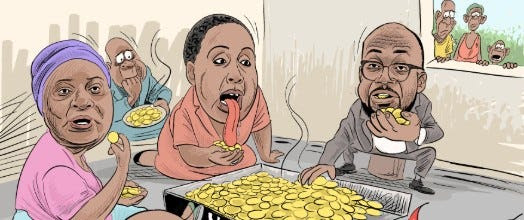
But about TOTAL, its antics, controversies among many, few questions still unanswered, the discovery of oil and gas in Mozambique attracted various entities, from Multinationals, local and foreign companies and private security, politicians, lobbyists, consultants and others in search of profit, a frantic rush. Meanwhile, the local communities remained practically with nothing. ‘ green zone’ Afungi isolated https://moz24h.co.mz/palma-denuncia-isolamento-de-afungi-e-incumprimento-de-acordos-no-projecto-mozambique-lng-novo-colonato/
The multinationals “Got what they wanted. They already built their LNG, closed Afungi. For us to leave our lands, they made us so many promises, agreements that until today, June 2025, were not fulfilled.” said Manuel Passar.
With TOTAL militarization also to protect the company from terrorists. Various atrocities were committed against communities in Palma, from economic and social issues, violation of their rights, people forced to leave their lands, beaten, poorly done resettlements, consultants, government protecting multinationals-TOTAL and not its people, narrative that oil and gas projects would create jobs, bring social benefits. Locals employed for cleaning.
“Paid to approve”
Consultants from Palma to Pemba, where consultations took place, were paid to approve the poor resettlements and also to create the narrative that oil and gas projects would generate jobs, good economic and social benefits. https://stopmozgas.org/wp-content/uploads/2024/09/Paid_for_ApprovalJA_2024_PT_web.pdf
“Community compensation: this work, as well as negotiations with communities, was entrusted to the company SCDS, which gave full satisfaction.”
https://totalenergies.com/sites/g/files/nytnzq121/files/documents/2023-05/Mozambique_LNG_report.pdf
French oil major Total Energies said it, along with its project partners, had lifted force majeure on their $20 billion Mozambique LNG project, four years after an Islamist militant attack brought construction to a halt.
Notice was sent to the Mozambican government via letter in a Friday, a Total Energies press officer said.The company said, however, the project would only be relaunched once the government had approved an updated budget and schedule.
“Before fully relaunching the project, Mozambique’s council of ministers needs to approve an addendum to the plan of development,” the company said. https://clubofmozambique.com/news/totalenergies-and-partners-lift-force-majeure-on-20-billion-mozambique-lng-project-reuters-294858/
The Mozambican government says it must be negotiated.
https://clubofmozambique.com/news/mozambique-to-conclude-negotiation-with-totalenergies-within-a-week-president-296221/. Meanwhile the situation on did not improve for community people and local businessman

Resettlements
In response, TOTAL states: The allegations are erroneous. The resettlement support plan at the Project site, on land (essentially the village of Quitupo, located on the Afungi peninsula) included extensive consultations with all stakeholders (more than 800 formal meetings, with active participation of community members, as well as representatives of district and provincial governments, and civil society).
A compensation rights framework was developed, aligned with International Finance Corporation (IFC) performance standards, which identified who was eligible for compensation. This framework was prepared based on extensive consultations with affected communities and all levels of government.
However, the communities were confined to “matchbox-sized” houses, with cultural and anthropological issues disregarded, traditions trampled, no space for fishing, farming, no vocational training, no jobs, which all went to people from other areas.
In the resettlement expansion area in Quitunda, looking at family units in Mozambique, especially rural areas, they have between three to ten or more children, three wives—twelve people all living together. “Sir, you are coming to give us that three-bedroom house, and I have 12 dependents! Where will we stay?” asked the resettled communities in Quitunda.
Manuel Passar, a resident born in Palma district, aged between fifty and fifty-five, a defender not only of human and environmental rights, has worked with his communities since living there, as well as from the start of the concessions rush, forced resettlements of his communities in exchange for promises, some long, poorly or never fulfilled to this day. “There are 704 family units living this way since 2018, 2020, after the declaration of the laboratory, the intercession of the resettlement plan in the Maganja community, including people from Quitunda resettled in Quitunda. In the lands of Tenga and Macala, it would not happen, so the project negotiated the lands, also with Mondlane and agreed, only that they went there without surveying each family unit’s assets.
They had hired Gabriel Couto’s company, which built TOTAL’s airstrip, to parcel the lands in Tenga, Maganja, while the company Badjeia was contracted to negotiate the lands. Meanwhile, Badjeia went ahead to negotiate and survey, and Gabriel Couto did the parceling, in a situation where Gabriel Couto was parceling before the survey by Badjeia was done; both companies were hired to provide services to TOTAL. In December, a demonstration was held in the Manga community, agreements were made stating they would no longer need Macala lands, and as compensation the community’s expectations would be met—that is, those who were to receive fifteen or eight hundred thousand meticais, one million or more, would be compensated for each signed agreement with 250,000. So someone signing three agreements, with different farms, would receive 750,000. But since signing in December last year, January, February until now, nothing has been paid, although the deadline was 30 days; meanwhile, serious problems remain in compensating lands of the entire affected community,” emphasized Passar.
After so many promises in a resettlement process that began just over or nearly a decade ago, it remains marked by “non-fulfilment by the French multinational TOTAL,” which took the reins after acquiring dominance following the transfer from SIP or part of the American multinational ANADARKO. Part of the unfulfilled agreements, according to Manuel Passar: “First, compensate all their assets. Improvements forcibly left in their original areas. They did not comply, but the goal of the multinationals, not the communities, was achieved. To move communities to Quitunda, they arranged transport, carefully separated each person’s belongings to be transported. Compensation of assets was at stake!” And the promises continued: “everything would be resolved once community members were in the resettlement village.”
Yet it remained only promises; to this day many people are claiming their lands. “They were not compensated for their assets left, for example, in Afungi, TOTAL’s area completely closed to public access—the communities. “The assets are still there, still claimed. The entire Total area, no population remains, everything has been removed,” said Passar.

Agriculture
The population confined in the village of Quitunda, “without replacement land” for their hectares of land forcibly left behind in favour of TOTAL, “were paid for their assets but have the right to receive replacement land for agricultural practice.” Even the two hectares previously promised by the multinational were not delivered, and even when reduced to one hectare, nothing was given to the communities. “Upon arrival in Quitunda, there were 30 days to receive replacement land for agriculture. Upon receiving the land, it was seen that the area TOTAL is delivering the replacement land, first, from Quitunda village to the said zone is a distance of about 5 to 7 km, blocks A and B are in the Senga area, and some people receive land in Mangala, which is about 3 to 7 km away,” said hundreds of community members in Quitunda.
Fishing
Once again, Total defends itself by stating that : “Resettled fishers also received monetary compensation and new housing. Additionally, the Project constructed access roads to the coast, identified and developed new landing points for fish, implemented a collective transport service for fishers, and is providing individual mobility means (tuk-tuks) to ensure autonomous access to the coast. The Project also contributed to creating fishers’ cooperatives with new equipment, including new fishing boats, enabling operations in open sea, expanding access to fish resources.”
However, these claims are contradicted by facts in Palma. Members of the resettled communities, who previously lived about 100 to 300 meters or 700 from the beach, the sea, fished at any time, day or night, now have everything restricted. Besides the long distances they must walk, TOTAL dictates specific fishing hours! One cannot tell the fish to wait for the fisher to remove it from the water with their net or hook.
The fishing package affects around 4,000 to 5,000 family units who still have no fishing compensation plans. “These families were told to fish in Palma village – Milamba beach. Later, they were prohibited from fishing in Milamba 1 and 2 in the Ngochi area. From motorboat fishers, boat fishers, basket-women fishers, and divers, the whole group was barred from fishing in that area. The promise was that they would receive 5,000 per month; it has been about two to three years, and they have not received this amount. Two fishing zones were promised,” reports Passar.
Passar’s voice sharpens as he recalls the distance—it is not just a few kilometers to walk. “It’s 12 kilometers to Salama in the Magalhães community, a conditional trip to Machupichu. From Quitunda it takes about seven hours, and they must leave there at the latest by 14:00, maximum 15:00!It doesn’t work, it doesn’t help at all. Besides not compensating families with the fishing package, there are also problems in the Salama zones. Only a few hours can be spent there at a time; the flow of people going simultaneously reduces fish catch, because most people live there and fish. Salama is near where the port is being built. Another constraint is that two zones were promised: one to receive, another third for fishing, but they were to resort to another reserved zone, yet now there is no reserve zone. Those living in Titúpolis village had to travel a maximum of 700 meters, but now are forced to travel 12 kilometers to reach the fishing area by 07:00 and leave by 13:00 or maximum 14:00,” emphasizes Passar.
“TOTAL got what it wanted and left the community to its fate… even exporting the Gas!? Even the military is only there to protect TOTAL, as seen during the attack on Palma on 24 March 2021. The withdrawal of its staff from Afungi peninsula right after the attack left the communities exposed; the attack revealed once more that ‘the military is there to protect TOTAL, not the communities.’
Manuel Passar recounts some events of the attack day. Drawing from his memories of that fateful day, he recalls that the press reported 800 UIR military mixed in, 500 in Afungi and 300 in Palma village. He asks, “How was it that fewer troops were in the village, where is the population!? The majority were to defend, in quotes, the gas!” Even so, now the situation is the same. The barracks securing Afungi have far more troops than the military camps securing the village, showing that the defense is for the gas at sea level, not the land. Troops and police from Rwanda and Mozambique are present, including Mozambican UIR police. “We can say there are six, plus the local force,” emphasizes Manuel Passar.
The UN has been urged to investigate allegations of serious human rights violations by Mozambican security forces at the gas exploration site: local leaders and Mozambican and international NGOs warn that current investigations lack independence and do not ensure justice or protection for victims. They call for a UN High Commissioner for Human Rights–led investigation as the only way to guarantee a fair, impartial, safe, and victim-centered process. The investigation should also cover members of the joint task force responsible for protecting the TotalEnergies Mozambique LNG project site.
The suspension of Total’s activities and the withdrawal of its staff from Afungi peninsula, Palma, immediately after the attacks of 24 March 2021, left entrepreneurs in Pemba – Cabo Delgado in uproar, beginning a Tom-and-Jerry-style scramble between them and the multinational! TOTAL owed entrepreneurs already facing losses, with bank loan interest rising, complaints about exclusion from gas projects, leaving everything to foreign subcontractors. At the time, Júlio Sethy, president of the Cabo Delgado business council, called for support: “Support our companies, at least so they are reimbursed for goods already supplied, in stock, and in transit.” Debt which was later settled.
TOTAL’s return remained uncertain, depending entirely on security in a province plagued by terrorism since 2017. About five years later, we return to Júlio Sete’s office in Pemba, Cabo Delgado.
Sete, while noting some improvements, observes that millions of dollars are at stake and that security must be enhanced. “I remember, without nostalgia, entrepreneurs who lost almost everything in Mocímboa da Praia and Palma districts, now working as employees of others. I am from Palma; these are people who have already lost trucks, equipment, properties. I am not encouraged to go! So many people bought land in Palma and abandoned it!” he questions.
He exemplifies: “Imagine hypothetically a village with nothing, then someone sets up a factory and says: This project will probably employ many, but it will not solve all the village’s problems. That is what is happening in Palma. We cannot expect them to replace the state. Talking about TOTAL, saying it will solve everything, absorb the workforce? No, it won’t.”
Sete considers that the international approach has changed greatly and that today he already sees some inclusion of local companies. “A very important aspect, especially on TOTAL’s part, is to involve national companies alongside international ones, giving preference to equal conditions, prioritizing national companies because they end up reinvesting their profits here in Mozambique and helping develop the country, whereas foreign companies often have to export their capital.” Said Total
If community members had been trained, after about 10 years they would already be competitive with others. Total states that “Training areas, aligned with the Government’s Single Local Content Programmed, cover transversal, vocational and technical skills such as electricity, construction, welding, plumbing, carpentry, painting, heavy vehicle driving, among others.
From ongoing programs, 1,454 young people have already benefited from training with IFPELAC and the Industrial and Commercial Institute of Pemba. Additionally, the Project contributed to ensuring adequate training conditions for 100 young residents of Palma in heavy vehicle driving, covering both theoretical and practical aspects.” Said Total
Thousands of jobs!?
TOTAL website – “Ethics: We are committed to exemplary conduct.” But the same cannot be said for the Palma communities. Nearly a decade after the start of the million-dollar gas project, the main training provided to these communities has been sweeping floors, clearing grass, and cleaning! Scholarships are distributed among relatives and friends of contractors coming from other regions. The use of subcontracted companies allows TOTAL to distance itself from these issues, as well as from accountability in fulfilling agreements with communities within the Rovuma Basin gas exploitation framework.

No inclusion in Palma
For Abudo Gafur of Kwndeleia, a local civil society organization in Pemba – Cabo Delgado, the first to receive internally displaced persons (IDPs) due to terrorism in the province, there is no inclusion of people from these communities in the gas project in Palma.
Gafur said that in contact with one of the local régulos in June 2025, the latter complained about non-fulfilment of agreements regarding resettlement, family compensation, and planning of how and when they should be compensated was never explained. They did not know, and even yesterday continued to be unaware.
“These new hires come from Maputo. They are repeating the same mistake. Even to make a bed, stretch a sheet… people come from Maputo! There was basic training, not significant enough for them to occupy more relevant positions; it was to clear grass from the road verges with support from the Mozambican and Rwandan Defence and Security Forces. I saw this with my own eyes when I was in Palma.
I worked at Anadarko. The deputy leader of Quitupo, a long time ago, could not write. Anadarko created some schools, where teaching began, work started, many jobs were created, the ladies with flags, men working on the roads directing cars, it was the company that trained these people. With compensation, they received a little financial education. Example of the company Rio do Incomáti.”
He emphasizes that “the communities are not included, they remain on the road with flags for signaling, cleaning is discrimination.”
“We are from Palma and we are here. Why don’t they give us jobs?” ask young community members. Yet there is wide exclusion of local people from the district. “We have already submitted this recommendation several times,” said Gafur.
For Anchinha, also of Kwendeleia, “If those people were in a good position, there would not be these conflicts. What happens is that these companies are more focused on distributing football kits, balls, simple things, but at the end of the day that is not what people want.”
Unemployed community
While TotalEnergies says that “the Project contributed to ensuring adequate training conditions for 100 young residents of Palma in heavy vehicle driving, covering both theoretical and practical aspects,” the community complains about not having access to quality employment, not only quality. To work at TOTAL is via online competition, but who will compete is someone fully literate; for people in Palma it is almost impossible, as Passar explains, recounting that TOTAL pretends to recruit by sending people from service companies to the communities, but it ends there.
“In the community, they leave a notice saying they want 30, 40, 50 people. They even take these people for tests. We are talking about blacksmiths, bricklayers, bricklayer assistants, people to reinforce private security company ranks. Like Baktek, a cleaning company, when they want to recruit, they go to the community and say they need X number of workers. People volunteer, even bring documents and go with them to the hospital for tests, yet the process stops there, and the people are not hired. Most hires, you’ll see, are from Maputo. There are people providing services to TOTAL; the community leaders, who they call activists, are the local facilitators.”
Scholarships
While Total tries to present a positive picture, stating that “This claim is completely unfounded and false… As part of this Local Content Plan, the Project has already granted 115 scholarships to Mozambican youth to study abroad, 99 for higher education in France and 6 for technical training in Portugal. Professional internships were also offered, in collaboration with MTV, to 10 Mozambican youths in the United Arab Emirates and Ghana.
Additionally, as previously mentioned, 1,454 young people have already benefited from training with the Instituto de Formação Professional e Estudos Laborais Alberto Cassimo (IFPELAC) and the Industrial and Commercial Institute of Pemba.”
Members of civil society and community members entirely contradict Total Energies’ claims by saying: “But what is really intended are technicians. These community members will never be employed where the bridge is being built, on the ships where the rest of the foreign team works. Scholarships are causing noise; they are not given to people from Palma. I know one individual born in Palma, son of the community leader of Quelimane. Those favored are the ones with government decision-making power, who fetch their children from Pemba, Nampula, and Beira, you see! Who gave this opportunity is TOTAL, but those who received it are not from Palma. TOTAL is full of problems with the community, and those who protect them are the government officials, who even leave their work to resolve TOTAL’s problems with the communities. TOTAL has the patronage of 70% of the government, who become TOTAL employees.”
Environmental Impact on gas
The Project has displaced thousands of local people, been the site of alleged human rights violations, is surrounded by violent conflict, and will cause significant environmental destruction. A new report reveals that the environmental risks of the gas projects have not been thoroughly assessed. On 14 July 2025, Friends of the Earth U.S. and Friends of the Earth Mozambique, https://www.foei.org/publication/gas-in-mozambique-a-windfall-for-the-industry-a-curse-for-the-country/ represented by Earth Rights International, filed a lawsuit challenging the U.S. Export-Import Bank’s unlawful approval of nearly $5 billion in financing for the Mozambique LNG project. As alleged in the lawsuit, EXIM rushed approval without conducting required environmental reviews, economic assessment, or allowing public and congressional input.https://www.zammagazine.com/investigations/1992-sell-outs-mozambique-2

Total completely isolates the communities
Thus, another meeting scheduled for 21 August between Total, the government, and communities, including local business representatives and local political party formations, was pointless. The meeting did not take place due to Total’s absence; again, just minutes before the start, they sent a letter to the district government proposing yet another postponement, the third, suggesting holding it the following month in September.
Laurinda da Fátima, Permanent Secretary of Palma, unsure on what to say about another Total absence, recalled that the attempt to meet with the French multinational, “I think conditions are now suitable because this conversation started on 1 August and today we are continuing, and we know very well that we are a trio: government, population, and project.”
In general business community in Palma, both share the same opinion speaking to our newspaper on 21 August 2025, completely frustrated, said: “The food is not leaving the shops, there is no more work for anyone. No one is buying food at the shop. Even for local transport, no one is available. It is over for us in Palma. They shut off the taps and the village is deserted; it is frightening! Now everything will be ruined with no return. We are not expecting anything more from Total.”
The Palma population denounces injustices, breaches of agreements, killings, and the attempt to completely isolate the Afungi peninsula.

Meanwhile those who did protest “started being killed, decapitated’
“As soon as we talked about the project, they started killing us. That’s why we say that the thing (terrorism) has to do with TOTAL. We have no doubts. First of all, who is the terrorist? We don’t know anyone. Anyone could be. The intention is to kill us and then they’ll be exploiting the gas alone so we don’t come here. It’s making sense, ever since we complained about the company, the isolation, the war has broken out completely. It’s not calm, it’s worse, every day they start beheading people in their homes. They want us to leave the village, ever since we complained about the company, it seems they’ve started saying ‘you’ll see, we don’t want you here anymore’.
They fired over a hundred of their workers, they say they don’t want anything to do with Palma. If they don’t want anything to do with Palma, why don’t they just leave?! How can they not want any connection with Palma while the gas is in Palma?! We can already talk about it, but you journalists can say that a stranger said that ever since they started complaining, they’ve been killing us.” Said group of people anonymous sources.
Almost all subcontracted companies under the Mozambique LNG project, including workers previously in Palma village, are being transferred to the Afungi peninsula, where security measures have been reinforced and gates are partially closed.
On September 6, 2025 further on question on right to Reply we sent to Total energies but the company until our publication refused to answer.
Though on 18 November 2025. Berlin, Paris, Maputo – Today, the European Center for Constitutional and Human Rights (ECCHR) filed a criminal complaint in France against Total Energies1 for complicity in war crimes, torture and enforced disappearance. The oil and gas major is accused of having directly financed and materially supported the Joint Task Force, composed of Mozambican armed forces, which between July and September 2021, allegedly detained, tortured and killed dozens of civilians on Total Energies’ gas site. The complaint has been filed with the French National Anti-Terrorism Prosecutor (PNAT), which also has a mandate to investigate international crimes. https://moz24h.co.mz/totalenergies-faces-criminal-complaint-for-complicity-in-war-crimes-torture-and-enforced-disappearance-in-mozambique/
This investigation was funded byGlobal Greengrants Fund (GGF) and t ETF Globalfund.org




Leave feedback about this