
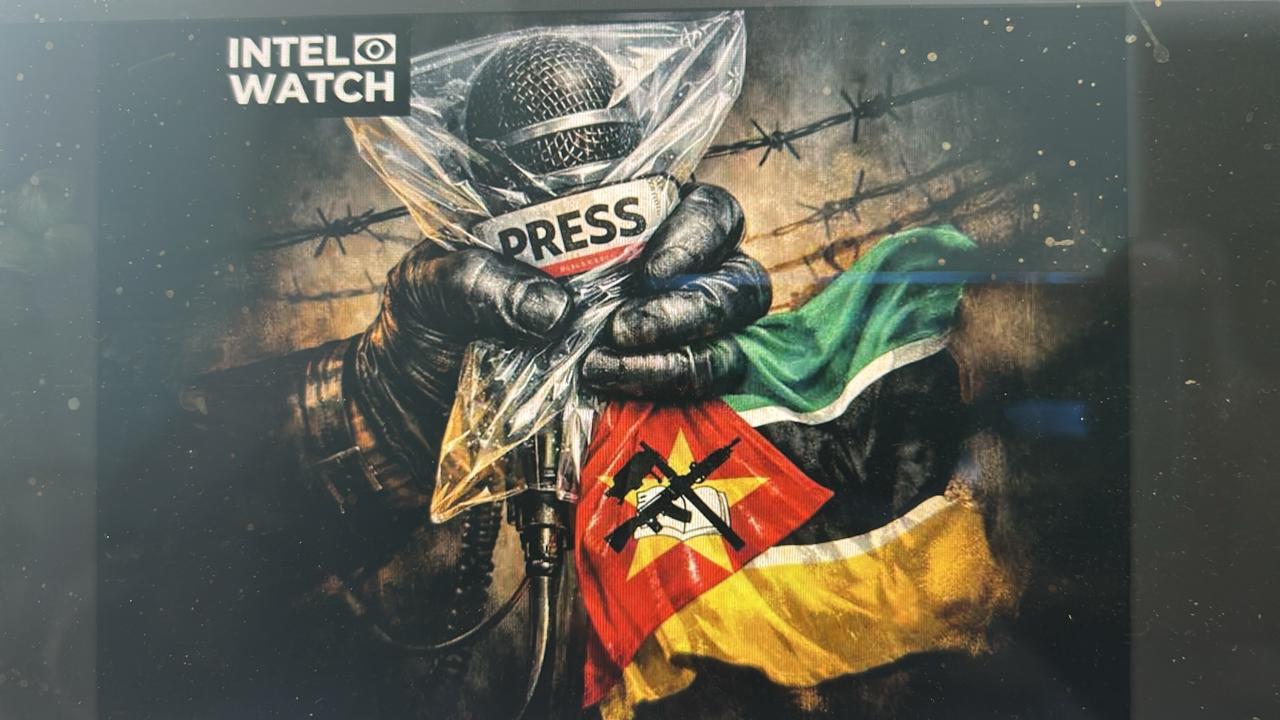
By Estacio Valoi and David Matsinhe
This report examines the escalating threats to media freedom in Mozambique, revealing a systematic state strategy to silence independent journalism and control public discourse. It traces the historical roots of press repression, analyses current legal, political, economic, and digital mechanisms of control, and documents the severe risks journalists face, including arbitrary detention, enforced disappearances, and murder. By mapping these interconnected threats, the report demonstrates how closing civic space undermines democratic governance and human rights. It also evaluates the impact on public trust and accountability and offers actionable recommendations to reverse the authoritarian trajectory and safeguard press freedom.
The Mozambican government has over the years sought to control the media as part of a campaign to control the media and suppress opposition voices. Through this campaign, the government has established a climate of fear which undermines democratic principles and human rights. Mozambican journalists face multiple threats among them legal restrictions, political pressure, economic intimidation, digital monitoring, and physical attacks. The governing FRELIMO party uses these attacks against the press as part of a deliberate plan to gain control over public discussions while eliminating media oversight functions.
The research established that Mozambique is “closing civic space” as governments actively limit essential civic rights. This is characterised by the state’s use of its legislative, executive, and security apparatus to silence critical voices. The tabled Social Communication and Broadcasting bills currently under public review, threaten to destroy media freedom through harsh legislative measures.
Despite constitutional guarantees under Article 48 and Mozambique’s binding obligations as a party to the ICCPR and the African Charter, these fundamental freedoms are under severe and sustained attack. The state has weaponised law, economic pressure, and coercion to silence independent journalism, while proposed media bills threaten to institutionalise censorship through a government-controlled regulator. Arbitrary arrests, enforced disappearances, and violence against journalists persist with impunity, creating a climate of fear and self-censorship. This systematic rollback of rights undermines democratic governance and erodes public trust. The country is experiencing what experts call “closing civic space”, the deliberate and systematic shutdown of basic freedoms, including freedom of expression, freedom of association, and the right to peaceful assembly. Governments frame these crackdowns as necessary for national security, public order, and increasingly, as counter-terrorism measures. In reality, however, these tactics aim to silence dissent and tighten the ruling elite’s grip on power. Attacks on journalists serve as early warning signs of broader democratic collapse. When reporters are silenced, other human rights violations inevitably follow. The crisis is particularly acute in Cabo Delgado, where an ongoing conflict has become a pretext for severe repression, as well as in Nampula, Zambézia, and the capital Maputo, all major centers for independent journalism.
This report documents and analyses a comprehensive spectrum of threats confronting Mozambique’s journalists, from restrictive legislation to enforced disappearances. It examines the legal, political, economic, digital, and physical dimensions of this crisis through detailed documentation and firsthand accounts from journalists working in dangerous conditions. While the report focuses on Mozambique as a whole, it concentrates on the period of sharp democratic decline from 2015 to the present, with special attention to Cabo Delgado, where conflict has provided cover for brutal repression, as well as Nampula, Zambézia, and Maputo, which remain vital hubs for journalistic activity.
The enforced disappearances of journalists Ibrahimo Mbaruco in April 2020 and Arlindo Chissale in January 2025, and the killing of others, are symptomatic of extreme structural violence for which there has been no accountability, fostering a deep-rooted culture of impunity. Mbaruco’s case sent a chilling warning to the entire media community, for without resolution, the prosecutors archived the case, despite his final text message stating he was “surrounded by soldiers” before vanishing.
Centring Cabo Delgado is methodologically appropriate, as access to information is extraordinarily difficult in the province, particularly in the heart of the insurgency. Journalists face kidnapping, murder, arrest, and constant threats. Their equipment is confiscated, sometimes with direct government authorisation. A concrete example is Estacio Valoi, one of the report’s authors, who was arrested and detained three times in Cabo Delgado. On 7 April 2017, Valoi was detained by Mozambican security forces in Pemba, Cabo Delgado, while reporting; his equipment was seized before he was released without charge. On 17 December 2018, both Valoi and David Matsinhe, the co-author, and their driver were arrested and detained, with all their work equipment confiscated and never returned In 24 July 2021, Valoi was arrested in Montepuez, another Cabo Delgado’s district, accused of terrorist activities while covering OIKOS’ humanitarian operations, a stark illustration of the escalating risks faced by journalists. Read from the link:
file:///Users/user/Desktop/mozambique_v2.pdf


Leave feedback about this