

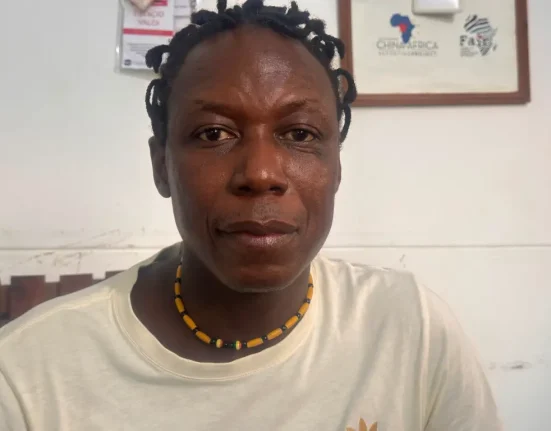
Josué Bila, human rights activist and journalist, Mozambique
I am originally from Mozambique, the southern African country that borders South Africa, Swaziland, Zimbabwe, Zambia, Malawi and Tanzania. In colonial times, in the nineteenth century, the Portuguese and South African governments signed a cooperation agreement for Mozambicans, particularly from the south, to work in South African mines. In such colonial context, Portuguese and South African companies earned huge profits making use of cheap Mozambican workforce. Therefore, our relationship of simple and “rotating“ disposable workers in a country like South Africa is old. It is still the old migration of unskilled labour, ready to provide services and sell themselves for jobs that in the history of labour relations few South Africans would do. Perhaps these are historical factors to consider when thinking about xenophobia in South Africa against Mozambicans. A migrant population working in areas considered by “the land owners” of low and negligible wages does suffer xenophobia beforehand, doesn’t it?
In recent years, perhaps less than ten years, the South Africans have guillotined Mozambicans and Africans of other nationalities, with their anger, when accusing them of stealing their jobs. Through these accusations, Africans, particularly Mozambicans, were expelled from their homes in South Africa and violated in the streets. This phenomenon is called xenophobia. However, I take the words from the Anglican bishop, Dom Dinis Sengulane, who says this phenomenon is not xenophobia, but rather afrophobia. They are South Africans, blacks, against Africans from Mozambique and other African nationalities.
What does this have to do with the impact on businesses and investments? In my view – considering I am not an expert on this – this has to do with the way companies, with its capitalist skin, want to earn huge profits without commitments to providing basic technical training to their workers in cooperation with vocational training centres, with the aggravating circumstance of not providing such decent working conditions.Obviously this happens where the State is weak, and fails to fulfil its watchdog role of minimum standards for working conditions. The xenophobia that exists in South Africa can still be seen from the perspective that Mozambicans would not take jobs from South Africans if those had technical skills and if human rights and social justice laws were met by the South African state, in cooperation with the countries of the region and to ethical humanity. As the State and companies invest in the workforce, capitalists, who finance the subversion of laws in their favour, need to keep healthy and without technical skillsslaves, in order to pay them low wages and not provide the minimum basic rights. In Mozambique, those who usually migrate to South Africa don’t have technical skills, so they accept any employment and underemployment opportunity. However, as the “owners of the land” in South Africa need jobs and don’t get them because Mozambicans have historically taken jobs with no decent wages nor working conditions, there is nothing left for South Africans but to accuse their fellow co-Africans of stealing their jobs.
I have talked a lot about South Africa and Mozambique. It is purposeful. The World Economic Forum on Africa 2015 will take place in South Africa, where there has been a wave of afrophobia against thousands of Mozambicans and hundreds of other Africans of other nationalities.
My proposal for this World Economic Forum is that it should have deep discussions about the importance of foreigners competing for jobs side by side with nationals, as this creates dynamic and competition between professionals. These discussions need to be disseminated in society, so that there is the understanding that, with globalization, belonging to the nation-state – or, if you like, state-nation- is no longer an elegant argument, particularly when it is used for violence, as the State or Nation are subordinated to the cosmopolitan State to which all of humanity belongs, to serve and serve itself. Companies, whether small or multinationals, need to rethink their profits without halting the progress of the cosmopolitan State, which, in essence, respects human dignity. I conclude by asking: what is the role of companies, multinationals and the hegemonic countries with respect to migration (migrants)? How can companies promoterespect for human dignity, if there is a global weakness to stop the waves of xenophobia on the part of States, whether those are fragile and strong politically and economically?



Leave feedback about this