
New investigations and analysis from ZAM and our network
 |
In this edition of the Kleptocracy Report:
- Editorial: A seat at the dinner table
- The cocoa dollar wasting game
- Rwanda’s war talk
- Civil society rising
- And more stories from the network!
Editorial
A seat at the dinner table
 |
Image Pixabay
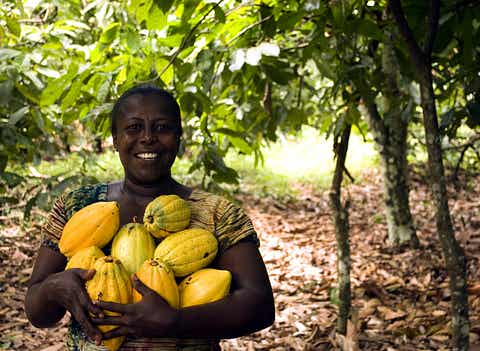
Our main feature in this issue of the Kleptocracy Report is the Cocoa Dollar Wasting Game: it shows how Ghana’s income from cocoa is largely wasted -and consumed- by those entrusted with the export management of the sweet resource. The tragic state of affairs is only masked by the cosmetic role played by a myriad ‘fair trade’ players and their posters of smiling cocoa farmers. “These are just propaganda”, our colleague Emmanuel Dogbevi writes.
Another image illustrates just how widespread the view is that a position in the state equals “a seat at the dinner table”. Our partners at Makanday in Zambia hammered the problem with the political patronage state home in a photo showing nurses attending a rally of (now again) president) Hakainde Hichilema. “Daddy, we need a job as a registered nurse” read their placard.
 |
Image courtesy Makanday
Their message was clear: we are supporting you to become president, now you owe us jobs. The answer came swiftly too: at the same rally, “loud cheers erupted after he (Hichilema) announced employment opportunities for volunteer teachers and health workers.”
It may have made the participants at the rally happy, but, as Makanday’s editor wrote: “Whatever the intention, recruitment associated with political gatherings risks creating the perception that proximity to political power provides a route into public employment. Therein lies danger. When someone believes they owe a government job to a political leader or party, where does their loyalty lie when power changes hands? (…) A civil servant does not work for (any) political party. (…) Until we draw that line clearly, every change of government risks becoming another struggle over who gets a seat at the dinner table.”
The privilege of a seat at the table was again made frighteningly clear in a bizarre incident recently in Cameroon. During a press conference, a minister missed his glasses. He accused four journalists attending the event of theft; they were arrested and imprisoned for six days. Though it seemed nonsensical to get into such a rage over eyeglasses (which were found in the minister’s car a little later on the same day), there was a real reason why the honourable Economy Minister Alamine Ousmane Mey had panicked. It was that, Cameroon learned swiftly from social media, they were made of real gold. Apparently it’s a thing for the country’s kleptocrats to “transform their unrestricted access to an excess of gold into any jewelry”, a NAIRE member from that country explained.
Tragically, those who expose these practices and fight to transform the patronage state, -often while also fighting off frivolous lawsuits, arrests and worse-, see their funding diminish by the day as big global players competing for natural resources keep focusing on lucrative deals with African governments, no matter how oppressive and corrupt. A new civil society initiative, also featured in this issue, speaks to this urgent state of affairs.
We produce the Kleptocracy Report with a small team of African investigative journalists. Your support can help us to keep publishing in freedom and open gateways for democratic change. Read more about our work and funding here. And please also comment, and contribute kleptocracy news for us to look at!
The cocoa dollar wasting game
 |
Image Pixabay
The world loves the chocolate made from Ghana’s cocoa beans, and smiling cocoa farmers are featured on many a ‘Fair Trade’ poster in the West’s supermarkets. But those in charge of cocoa revenues flowing into the West African country have been found to be responsible for major mismanagement and waste, defaulting on payments to the country’s nearly one million cocoa farmers and other sector workers, while saddling all Ghanaians with ballooning debt. “The lenders, like the IMF and World Bank, are complicit. They benefit from the status quo.”
Read the Cocoa Dollar Wasting Game
War talk
 |
Image Pixabay
The propaganda emanating from Kigali is a warning: Rwanda’s regime now presents a global threat, writes Samuel Baker Byansi. Analysing two articles that recently appeared in Kigali’s media ecosystem, Byansi concludes that the war in eastern Congo, waged for primarily for minerals but also for alignment of all Kinyarwanda speakers around Rwanda’s regime, is far from over. There is even a risk that the conflict could expand.
Civil society rising
 |
Nana Asantewa Afadzinu, executive director of the West African Civil Society Institute, speaks during the Africa at the Centre Conference in Accra, Ghana. Image courtesy of Africa at the Centre/WACSI
The NGO world in Africa — while often performing important work in healthcare and other public services — has also been criticised for its dependence on donor agendas and the practice of tailoring grant proposals to fit donor themes and priorities. Satirists have lampooned these and other habits of many NGOs, including their, likewise donor-influenced, reluctance to challenge authority. But in early September, signs of change began to emerge across the sector.
Stories from the network
- Appeals to international justice players sometimes help African countries recover losses from plunder and fraud -and these appeals are often underpinned by African journalists’ investigations. Our partners at Premium Times in Nigeria rightfully earned congratulations when their investigation turned out key in defeating a corrupt player in a hydropower project arbitrated at the International Chamber of Commerce (ICC) in Paris, France.
- Yet to be recovered, US$ 271 million in real estate was found to belong to Nigerian politicians and their friends in the United States. Read PPLAAF’s investigation here.
- In Malawi, our colleagues at the Platform for Investigative Journalism keep following the UK case against businessman Zuneth Sattar who, through Malawian political friends, secured hundreds of millions of US$ worth of contracts -ironically, including food parcels for the poor. Sattar is back in court in November.
ZAM works with investigative reporters in African countries to bring you this content. Please subscribe, preferably paid, to support and enable more ZAM and NAIRE Kleptocracy Reports. Also: do comment and send us alerts to news we should be aware of!
Thanks for reading The Kleptocracy Report by ZAM x NAIRE. Subscribe to receive new posts and support




Leave feedback about this