
By MOZTIMES
Maputo (MOZTIMES) – Mozambique is being pulled deeper into evolving regional drug trafficking routes, as new data reveals that the country is no longer just a transit corridor but an increasingly affected domestic market, with rising consumption and organized networks placing mounting pressure on public health, security and social stability.
The latest government report, presented to the media on Wednesday in Maputo, shows a sharp escalation in both trafficking activity and its internal consequences, underscoring a dangerous shift in the country’s role within global drug flows. Long considered a transit point for narcotics moving between continents, Mozambique is now absorbing part of that flow, with visible and growing impact across communities.
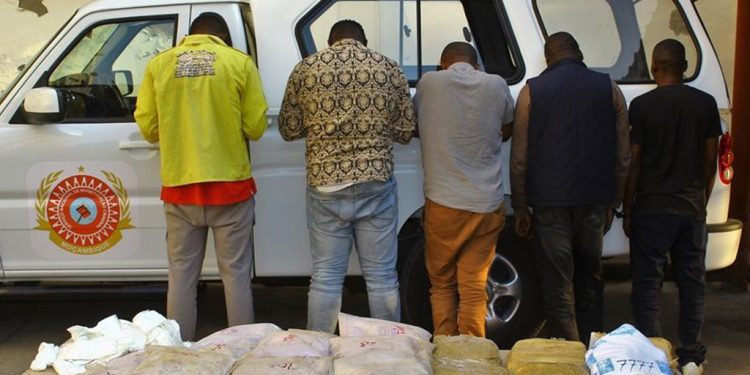
According to the report, the Mozambican authorities seized more than 4.4 tonnes of illicit drugs in 2025 alone, including significant volumes of cocaine and cannabis, in operations that also led to the detention of over 600 individuals and the opening of hundreds of criminal cases. The figures point not only to intensified enforcement, but also to the scale and persistence of trafficking networks operating across the region.
Officials acknowledge that the country’s vulnerability is structural.
“Mozambique’s geographical location, as a corridor linking East and Southern Africa, makes it particularly vulnerable to illicit drug trafficking,” the report states. But what was once primarily a geographic risk is now translating into a domestic crisis.
Health data paint a worrying picture. More than 32,000 people were treated in 2025 for mental and behavioral disorders linked to drug use, a 27.5 per cent increase compared to the previous year. The surge reflects not just higher consumption, but more complex and dangerous patterns of use.
Cases involving multiple substances have risen sharply, becoming the leading driver of treatment demand. Alcohol remains a dominant factor, while cannabis, opioids and cocaine continue to feature prominently — often in combination, amplifying health risks and complicating treatment.
The burden is falling disproportionately on young people. The majority of cases are concentrated among individuals aged 21 to 35, with increasing numbers of adolescents entering the system — a trend that signals earlier exposure and a widening pipeline of dependency.
“The growing involvement of adolescents and young people in drug use and, in some cases, drug trafficking jeopardizes their future and threatens the social cohesion of our communities,” the report warns, pointing to the long-term social cost of inaction.
Law enforcement gains have done little to slow the broader trend. While hundreds of suspects have been detained and convicted, including foreign nationals, trafficking networks continue to adapt, shifting routes, methods and operational structures to evade detection. The result is a persistent cycle in which seizures rise, but supply remains resilient.
Beyond the statistics, the economic and institutional strain is becoming increasingly visible. Public health systems are under pressure from the growing number of patients requiring long-term care, including costly treatment programmes supported largely by external funding. At the same time, communities face the social fallout from family breakdown and school dropouts.
The Government response has expanded in scale but faces limits in impact. Prevention campaigns have reached millions, with tens of thousands of activists mobilized and widespread awareness efforts targeting youth. Yet officials concede that education alone cannot counter a problem driven by transnational networks and sustained supply.
The report ultimately suggests a deeper structural shift. Mozambique is no longer simply a waypoint in the global drug trade, it is becoming part of the market itself. (MT)


Leave feedback about this