

In this issue
+ Harsh economic warnings
+ Debt and foreign exchange crisis
+ Frelimo sees a different picture
+ Higher import costs
+ No jobs in Cabo Delgado
=============================
Harsh warnings from Oxford Economics & Standard Bank
Forecasting firm Oxford Economics last week (2 March) raised Mozambique to the highest economic and political risk of the 25 African countries it surveys, with Malawi now second and Zimbabwe third. And Standard Bank this morning (9 March) in its Africa Flash Note warned that “the Iran Middle East crisis brings increased risks to Mozambique’s fragile Balance Of Payments and fiscal position,” due to increases in fuel and other import costs.
But most importantly, Standard Bank warns that “it may take nearly a decade for a material contribution from LNG [Liquified Natural Gas] to government revenue, and multiple decades and reform progress for LNG to start having an impact on poverty alleviation” with “poverty affecting nearly 70% of the population.”
Mozambique’s National Statistics Institute says GDP fell last year, by 0.5%, with growth in extractive industries but with the rest of the economy contracting by 1.6%. Standard Bank predicts GDP growth of 1.5% this year and Oxford Economics only 0.3%, both much less than previous predictions. Oxford Economics said “Unfortunately, we foresee Mozambique’s economy facing another difficult year in 2026.”
Oxford Economics says risks have become worse because of slow growth, increasing public debt, IMF-enforced devaluation (Oxford say this year, Standard says next year), and political uncertainty remaining at a high level. Oxford says the tensions that caused demonstrations last year have not reduced, and devaluation will increase prices and the cost of living.
Debt and foreign exchange crisis
The financial crisis and shortage of foreign exchange is worsening. Commercial banks are restricting foreign credit card and purchase payments. Public debt rose almost 5% in 2025 compared to the previous year, closing at $18 billion, Lusa reported on Friday (6 March). Mozambique cannot obtain any more foreign loans, and it is surviving on domestic debt, which rose to $7bn last year; of that $1.4 bn is provided by the Bank of Mozambique. Last year domestic interest amounted to $637mn and interest on external financing also reached $200mn last year. Increasingly the debt is seen as unsustainable.
Government also has no money for promised projects, including road repairs. And STV reports that the public hospitals cannot obtain drugs because government has failed to pay its debts.
Frelimo sees a different picture, but can the Frelimo economy survive?
All of Frelimo’s statements have been optimistic and that they will be saved by the gas, with money coming in to government sooner than Standard Bank predicts. Although external support has decreased, Frelimo appears to feel that it has gotten away with stealing the 2023 and 2024 elections and killing more than 400 young people in the subsequent demonstrations. Therefore it is betting that it can use force to stay in power through the 2028 and 2029 elections and on to the start of the gas money.
Over the past three decades Frelimo has created an oligarch service economy, dependent on state contracts, importing, and taking commissions (“rents”) from the extractive sector, and no invesment in the productive sector or job creation.
But even for the Frelimo oligarchs there are clouds on the horizon. Economic historian Peter Turchin writes of “elite overproduction” with too many “elite aspirants” competing for a limited number of positions in the upper echelons of politics and business. This is already happening in Mozambique. President Armando Guebuza turned the civil service into a branch of Frelimo. The three presidents – Joaquim Chissano, Armando Guebuza and Filipe Nyusi have ensured that their extended families have businesses, mines, and secure positions. And when they were presidents they brought in ministers and others in key positions who became part the inner circle of “elite aspirants”. The political and economic battles between the groups allied to Chissano, Guebuza, and Nyusi have become public, and Chapo is having to fight them to build his own group.
A mix of illegality and contracts going to preferred agents means that huge parts of import-export trade are illegal. Much of the gold and hardwood timber is controlled by the families of presidents and other elites, and exported illegally with no money going to government and with substantial environmental damage. Bribes are organised so that logs and gold leave the counry unchecked. Hundreds of individual traders called mukheristas bring in large amounts of goods overland from South Africa and by air from Brazil, India and elsewhere and pay only token fees to immigration and customs staff.
The South African supermarket chain Shoprite last week (5 March) said that is was expanding in many countries in Africa but was closing supermarkets in Mozambique. Shoprite pays its import fees and taxes and is now finding that the mukheristas are selliing goods for lower prices than is possible for Shoprite.
Higher import costs
The Frelimo economy has kept the exchange rate fixed at $1 = MT64 since 2022. Oxford Economics and many economists say the metical is exchange rate overvalued by 20% to 25%. Imports of rice and other things cost less than production in Mozambique. In the Frelimo economy, elites and oligarchs import many things rather than produce them locally. But IMF is demanding devaluation, which will raise the cost of all imports by 20 to 25%.
The Mediterranean Shipping Company (MSC) has announced a war surcharge on cargo bound for several African countries including Mozambique. There will be an additional charge to containers of $500 per 20 foot container (TEU). This will add to import costs.
Devaluation and higher import charges will raise the cost of food and consumer good and could provoke discontent.
No jobs in Cabo Delgado
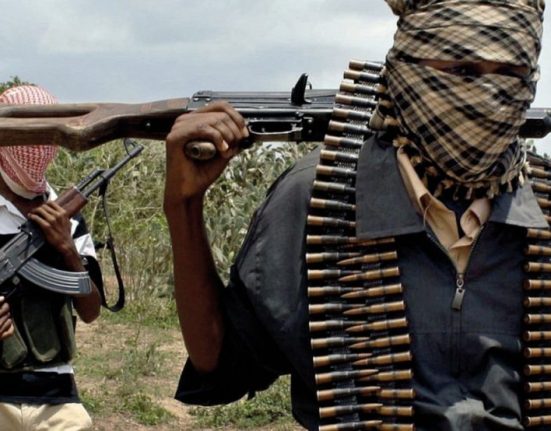
With the end of rainy season, the insurgency has resumed in Cabo Delgado. The centre for liquification of natural gas (LNG) on the Afungi peninsula just south of Palma has been turned into a fortress, with no land access, and guarded by Rwandan security forces. Access will only be by sea of air. This means few jobs for local companies and Palma and Mocimboa da Praia will not be bases for contractors, as had been previously planned.
ExxonMobil and Total Energies have made clear that contractors and subcontractors cannot work with “politically exposed persons” (PEPs) and firms, according to Africa Intelligence (23 February). PEPs are government officials, senior politicians and their families. This message was conveyed to service companies competing for contracts, and is designed to limit costs and political and corrupt entanglements. This includes members of the Frelimo economic system who had been hoping for to use political contacts to win contracts. This also includes ENH (Empresa Nacional de Hidrocarbonetos) which is a partner in the project. Africa Intelligence says that this will exclude Tsebo Facilities Management (TFM), which had expected contracts. One owner of TFM is Pascoal Mahikete Mocumbi, son of former prime minister Pascoal Manuel Mocumbi. Pascoal Mahikete Mocumbi has also been ENH’s commercial director since 2020. Another TFM owner is Videre, run by brothers Mamadou Chivambo Mamadhusen and Dingane Abreu Mamadhusen, who are close to Frelimo and sons of former foreign and environment minister Alcinda Abreu. TFM has been supplying meals to the Rwandan and Mozambican Joint Task Force defending the Afungi fortress.
Also in Cabo Delgado, the government has lost opportunities to create jobs linked to graphite mines. For the graphite mine in Balama, Cabo Delgado, the Australian mining company Syrah has signed an agreement with Canadian company NextSource to export the graphite to Abu Dhabi where it will made into anodes for electric car batteries which will be shipped to Japan. Anodes are not high technology and could be manufactured in Cabo Delgado, but it appears that no oligarchs have any interest in setting up a manufacturing company in Balama.
This newsletter in pdf is on https://bit.ly/Moz-663


Leave feedback about this