
Ten days after the date of the ministerial response—on September 24, 2026—the Maputo City Administrative Court issued Judgment No. 153/TACM/CA/2026 within the scope of injunction proceedings related to the award.
The court ordered the suspension of the administrative act by which the tender had been awarded to the UNION ENERGY/ZHONGMEI consortium. It also ordered the respondent entity to refrain from executing the concession agreement, issuing the notice to proceed, or taking other actions that would consolidate the effects of the award, pending a decision on the administrative appeal or a subsequent court ruling modifying the measure.
Court Suspends $37 Million Machipanda Border Contract Award
October 13, 2026
SAFAGA challenged the tender evaluation, reported suspected irregularities to the Central Office for Combating Corruption, and saw the dispute reach the Administrative Court. The Ministry of Transport and Logistics defended the ranking and temporarily denied CJI access to the evaluation documents.
By Estacio Valoi
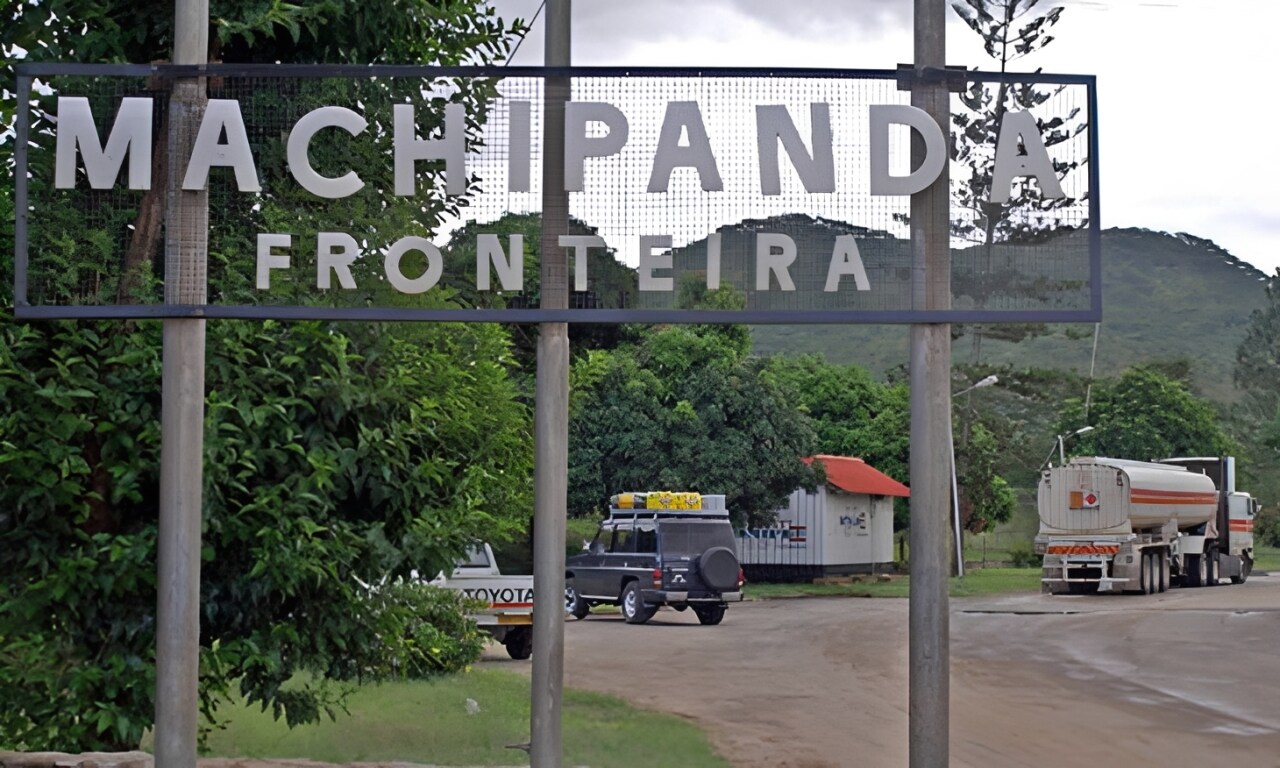
The concession for the Machipanda border—a strategic commercial link between Mozambique and the Southern African hinterland—lies at the heart of an administrative and legal dispute that has resulted in the suspension of the award for a project valued at US$37.1 million.
The decision was issued by the Maputo City Administrative Court via Ruling No. 153/TACM/CA/2026, dated September 24, 2026. It follows a legal challenge filed by SAFAGA contesting the results of the international public tender for the development of the Machipanda Border Integrated Project.
The court ordered the respondent entity to refrain from executing the concession agreement, issuing the work commencement order, or taking other actions that would consolidate the effects of the contract award, pending a decision on the legal challenge or a subsequent court ruling modifying the measure.
This court-ordered suspension marks the latest chapter in a process that began with a challenge to the proposal evaluation results, proceeded to a formal complaint filed with the Central Office for Combating Corruption (GCCC), and drew the attention of the Center for Investigative Journalism (CJI), which sought clarifications and access to the tender documentation.
At stake is not merely the selection of the winning bidder, but also the rationale behind the evaluation, the project’s economic viability, and the transparency of a concession with strategic significance for the country.
An award challenged on five points
The tender, identified as No. 45A000141/CP/02/2025, concerns the development of the Machipanda Border Integrated Project. The initiative entails the construction and modernization of infrastructure for the movement of goods and passengers, a new international bridge over the Machipanda River, and other components essential to the border post’s operations.
The project was presented as an opportunity to modernize one of Mozambique’s key gateways for the import and export of goods, improve logistical efficiency, and boost the competitiveness of the Beira Corridor.
On June 3, 2026, the Ministry of Transport and Logistics notified the UNION ENERGY/ZHONGMEI consortium that it had ranked first, with a bid of US$ 37,157,167.40 (including VAT). The consortium scored 86 points, compared to the 81 points awarded to SAFAGA.
The five-point margin became the focal point of a dispute regarding evaluation criteria, the bidders’ technical experience, and the financial viability of the selected proposal.
SAFAGA filed an administrative complaint challenging the scores awarded across six evaluation criteria. Issues raised included experience with border projects, technical and financial capacity, the justification for the rankings, and adherence to principles of equality, impartiality, transparency, and fair competition.
According to the challenge, SAFAGA’s proposal incorporated experience with border projects—including the modernization of the Beitbridge border post in Zimbabwe—and featured a business model designed for a long-term concession.
Conversely, the winning proposal was challenged by the unsuccessful bidder, who argued that equivalent experience in the operation and management of border terminals via public-private partnerships had not been demonstrated.
These allegations were also reported by the *Evidências* newspaper in its August 11, 2026, edition. While they do not in themselves constitute proof of favoritism or corruption, they raise concrete questions regarding how the evaluation criteria were applied.
The timeline behind the score difference
In its response to the administrative complaint, the Ministry of Transport and Logistics attributed the score difference primarily to concerns regarding the timeline proposed by SAFAGA.
According to information reported by *Evidências*, the proposal’s construction schedule outlined a total period of 54 months, comprising 24 months for pre-construction and 30 months for construction. This schedule would exceed the deadline established in the tender, which pointed to October 2028.
SAFAGA countered that it had presented an alternative acceleration program, which would allow the pre-construction phase to be reduced to 12 or even six months and bring forward the start of cargo terminal operations to September 2028.
The jury, however, considered that the proposed acceleration introduced uncertainties, as it depended on successful negotiations with financial institutions.
This is precisely where the rationale behind the evaluation warrants particular attention. The issue is not merely whether SAFAGA’s initial schedule exceeded the planned timeframe, but also how the alternative program was assessed, the weight this factor carried in the final ranking, and whether the same criteria were applied consistently to all competitors.
When a five-point margin determines the selection of a private partner for a concession of this magnitude, the individualized justification for the rankings becomes especially significant.
Without access to the necessary information, it is impossible to fully verify whether the score assigned to each proposal met the criteria established in the tender.
Doubts regarding economic viability
The challenge was not limited to technical aspects. The winning consortium’s financial proposal was also questioned in the documents associated with the complaint.
According to an article published by *Evidências*, the financial analysis consulted by the newspaper indicated a total investment of approximately 2.378 billion meticais and a projected accumulated net result of roughly 1.344 billion meticais over the 25-year concession period.
The document raised doubts regarding the relationship between the planned investment and the projected financial return, questioning the sustainability of the business model.
These figures alone do not justify the conclusion that the project is economically unviable. To determine that, a comprehensive analysis of the financial plan, expected revenues, operating costs, financing terms, and risks assumed by the concessionaire would be required.
Nevertheless, the issue is significant. A concession of this nature goes beyond the mere construction of buildings, roads, and other infrastructure. It entails the ability to ensure efficient operations, finance investments, manage risks, and guarantee that the anticipated economic and logistical benefits translate into advantages for both the State and commercial operators. Selecting a private partner to manage border infrastructure for 25 years therefore requires an assessment that can be explained and substantiated with documentation.
From complaint to formal report to the GCCC
On June 16, 2026, the formal objection was referred to the Central Office for Combating Corruption (GCCC). SAFAGA alleged suspected unethical practices in the evaluation process and requested the intervention of the competent authorities.
The complaint, as reported by *Evidências*, cited potential violations of public procurement principles and called for a re-evaluation of the award criteria and the grounds for the decision.
However, it is important to distinguish the filing of a complaint from the proof of criminal wrongdoing. The mere fact that a report was submitted to the GCCC does not in itself imply that corruption occurred or that those responsible for the evaluation committed an infraction.
Determining any liability depends on the investigation and the conclusions reached by the competent authorities.
What the complaint made unavoidable was the need to clarify the issues raised: how the criteria were applied, what documents supported the scores, how the bidders’ experience was analyzed, and what grounds justified the final choice.
The Ministry’s second response: information temporarily unavailable
The controversy took on a new dimension when the Center for Investigative Journalism requested clarifications and documentation regarding the tender.
In Note No. 955/GM/MTL/2026, dated September 14, 2026, the Ministry of Transport and Logistics responded to the CJI’s request, acknowledging that the matter fell within the scope of the right of access to information—a right enshrined in Article 48 of the Constitution of the Republic and regulated by Law No. 34/2014 of December 31 (the Right to Information Law).
The Ministry did not deny the existence of this right.
Among the grounds cited were the pendency of an administrative appeal, the confidentiality of evaluation proceedings, the protection of competitors’ trade secrets and intellectual property, and the need to safeguard the effectiveness of administrative action.
The response added that the premature disclosure of jury minutes, scoring sheets, and detailed technical evaluations could interfere with the ongoing process and affect the rights of third parties. The Ministry also mentioned the matter’s submission to the GCCC and the confidentiality regime applicable to certain criminal investigation proceedings.
In conclusion, it deemed the disclosure of the technical report, jury minutes, and scoring sheets to the CJI to be temporarily inappropriate, citing Article 31 of the Right to Information Law and Article 28 of Decree No. 79/2022 of December 30.
The response raises a central question regarding public scrutiny: to what extent does the existence of pending administrative or judicial proceedings justify refusing access to all the requested documentation?
Protecting sensitive commercial information and procedural acts subject to confidentiality requirements may constitute legitimate grounds for restriction. However, the specific application of these exceptions to the various requested documents requires clarification—including regarding the possibility of releasing versions with the truly confidential elements redacted.
Merely citing confidentiality does not clarify whether all documents must remain inaccessible or whether certain information can be disclosed without compromising pending proceedings.
For the CJI, the challenge lies precisely in identifying the grounds for each refusal and determining what information can legitimately be provided without violating statutory exceptions.
The Administrative Court Intervenes
Ten days after the ministerial response—on September 24, 2026—the Maputo City Administrative Court issued Judgment No. 153/TACM/CA/2026 within the scope of injunction proceedings related to the contract award.
The court ordered the suspension of the administrative act by which the tender had been awarded to the UNION ENERGY/ZHONGMEI consortium. It also ordered the defendant entity to refrain from executing the concession agreement, issuing a notice to proceed, or taking other actions that would solidify the effects of the award, pending a decision on the legal challenge or a subsequent court ruling modifying the measure.
In its reasoning, the court found that the legal prerequisites for the injunctive relief had been met, including the need to prevent irreparable harm, the lack of evidence that the suspension would cause serious injury to the public interest, and the existence of sufficient indications of illegality to be examined in the main proceedings.
This decision marks a pivotal development in the timeline of the tender process. The award—which was already subject to an administrative challenge—has now been judicially barred from taking effect pending a review of its legality.
However, a legal distinction must be drawn: the ruling suspends the effectiveness of the award but does not definitively declare the procedure void, nor does it demonstrate, in and of itself, that the tender has been annulled.
The preliminary injunction aims to preserve the utility of any future ruling. The final determination regarding the validity of the administrative act depends on the ongoing legal proceedings and the court’s ultimate decision.
The court’s intervention also underscores the significance of the issues raised during the administrative challenge and increases the urgency for a public clarification of the grounds for the award decision.
Two responses and lingering questions
The Ministry’s two responses occupy different positions within the process. In the first, the institution sought to justify the evaluation and the scoring difference between the competitors, highlighting uncertainties regarding the timeline presented by SAFAGA. In the second—issued in response to a request for information from the CJI—it cited pending administrative and judicial proceedings and the need to protect documents deemed confidential.
The two positions are not necessarily contradictory. One seeks to explain the grounds for the evaluation; the other maintains that certain documents should not be disclosed while the identified legal risks persist.
However, some questions remain without a public answer.
If the Ministry considers the evaluation to have been duly substantiated, what elements can be disclosed to allow for the verification of that rationale? Which specific documents would, if disclosed, compromise the pending proceedings? Why would it not be possible to release versions with protected commercial information redacted, thereby preserving the public interest in scrutinizing the contracting process?
Answering these questions does not require the indiscriminate disclosure of all documents, nor does it presuppose that SAFAGA’s allegations have been proven. Rather, it requires a clear distinction between information genuinely protected by law and information to which access can be granted.
There is also a question regarding the execution of the court ruling: what was the status of the procedure when the judgment was handed down? Had the contract already been signed? Had any steps toward implementation been taken? And what measures did the Ministry take to comply with the court’s order?
These questions should be answered based on official documents and clarifications, without prejudging any potential administrative or criminal liability.
What remains to be clarified regarding Machipanda
The available documentation allows for the reconstruction of a significant part of the tender process, yet it does not resolve every issue.
Making the technical report, jury minutes, scoring charts, and the individualized rationale for the evaluation available—within the limits permitted by law—remains crucial for verifying the claims raised by the bidders.
It is also necessary to track the progress of the complaint filed with the GCCC—without preempting conclusions regarding criminal liability—and to monitor the legal proceedings that led to the court-ordered suspension.
Finally, the Ministry must clarify the current status of the procedure, whether any subsequent decision has altered the precautionary measure, and what the planned next steps for the project are.
Modernizing the Machipanda border crossing is of strategic importance to regional trade and the Mozambican economy. However, the project’s significance does not diminish the need for scrutiny; on the contrary, it demands even greater rigor.
When a contract award worth tens of millions of dollars is challenged by a bidder, reported to the authorities, and subsequently suspended by a court order, the issue goes beyond simply who won the tender. It becomes a question of how the decision was reached, the grounds supporting it, and whether the institutions can demonstrate—through documentation—that the public interest was safeguarded.
Machipanda is still waiting for a modernized border crossing. Yet, before moving forward, the concession process requires clear answers regarding the legality of the award, the rationale behind the evaluation, and the limits of access to information.


Leave feedback about this