
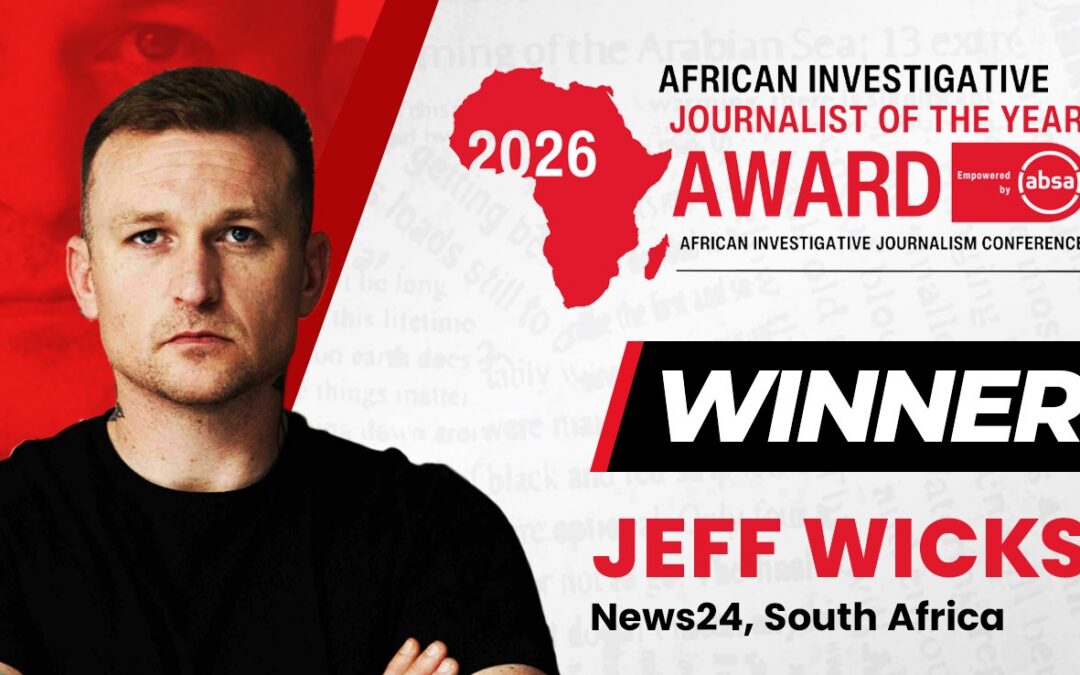

South African investigative journalist Jeff Wicks won the 2026 African Investigative Journalist of the Year Award in Nairobi, Kenya on 11 November.
Wicks’ multi-story coverage of Vusi “Cat” Matlala and his capture of a R360-million police tender along with his ties to sitting and former police ministers in South Africa, known as the “Nine Lives” exposé, topped 200 other entries for the awards.
The 2026 judging panel, led by famed Namibian journalist, Gwen Lister, commended Nine Lives for having all the ingredients of a top-tier investigation, including depth of research, succinct writing and editing, good visuals and real-life accountability.
“It combines journalistic rigour with excellent writing. We are in the heart of accountability journalism,” they said in a speech read by panel member and Senegelese investigative journalist, Tidian Sy.
Wicks’s investigation resulted in tender cancellations recovering at least R310m, a Special Investigative Unit referral, and the arrest and prosecution of a National Police Commissioner. It also fed directly into the ongoing Madlanga Commission of Inquiry in South Africa.
Wicks, who was unable to travel to Kenya for the award ceremony, said in a pre-recorded message, “I’m humbled to accept this award, even more so considering the number of entries and the strength of work submitted by the other finalists.”
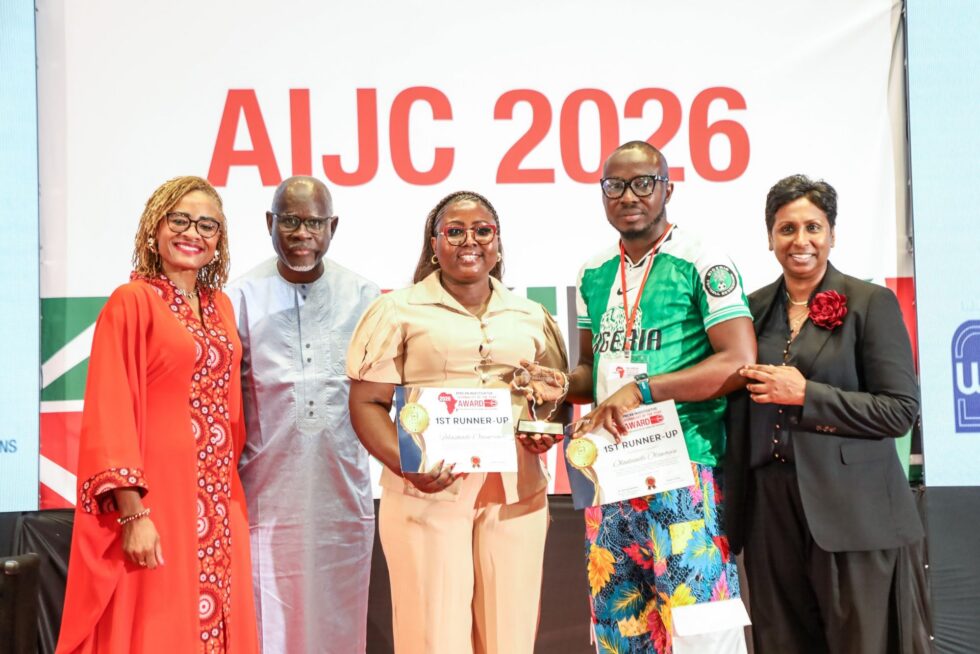
The first runner-up award went to Folashade Ogunrinde and Oladeinde Olawoyin of Nigerian news outlet Premium Times, in collaboration with The Examination, for “Lead In Their Blood”, exposing how factories in the small town of Ogijo have become “agents of quiet destruction” by poisoning the soil, water, and people in the community.
The judges said this was one of the few environmental pieces submitted this year which also proved to be a great investigation.
“This is a reminder of the missing link between science and journalism, where scientific tests became a backbone of the journalism produced. The results were translated into human stories, and connected them to accountability, to serve public interest and show the cost of a toxic industry hidden from the public eye,” said the panel.
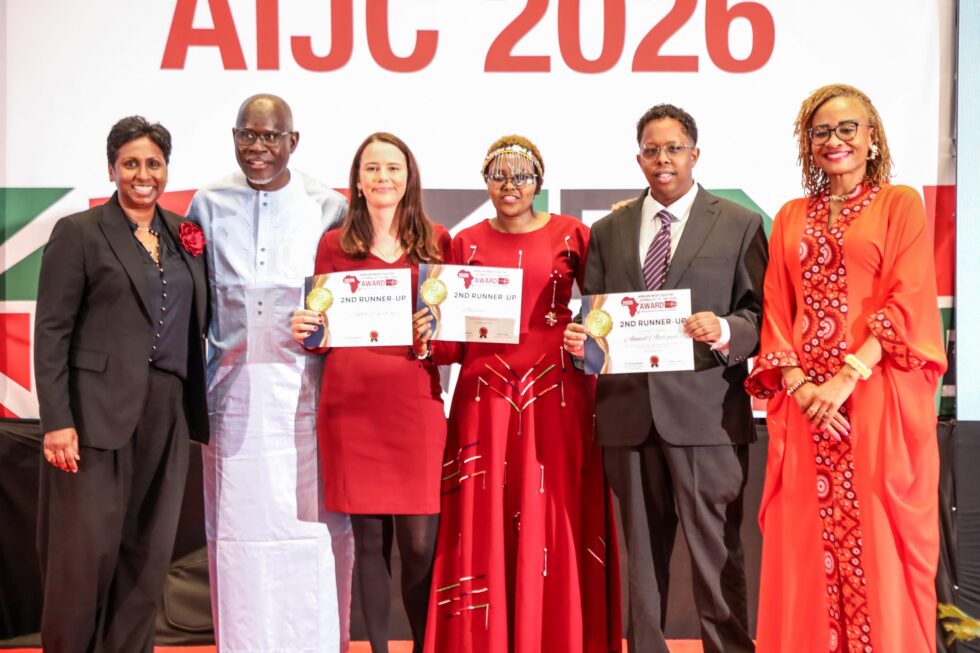
Second runners-up were Kenya’s Naipanoi Lepapa in collaboration with Julia Lindblom of Göteborgs-Posten and Ahmed Abdigadir of Svenska Dagbladet in Sweden for Your Eyes, their Data. The cross-border investigation exposed how sensitive footage from Meta’s AI-powered Ray-Ban smart glasses, including intimate and financial recordings, was routed to Nairobi-based data annotators for labelling with inadequate anonymisation, consent, or worker protection.
“Weighing up what makes an excellent investigative piece is never easy,” said Sy.
“We considered depth of research, public interest, real-world impact, the level of personal risk involved, innovation, diligent field work or one-of-a-kind exceptionalism. Our deliberations were lively and intense as we critically reviewed the shortlist drawn from more than 200 submissions this year – a record thus far.”
“Against the backdrop of the various and many constraints facing this industry, journalists who continue to work with commitment, ethical discipline and accountability across the continent, are all winners tonight. Yours is a victory over AI generated fakes, and over those who repackage your reporting without credit or verification and profit from it,” said Sy.
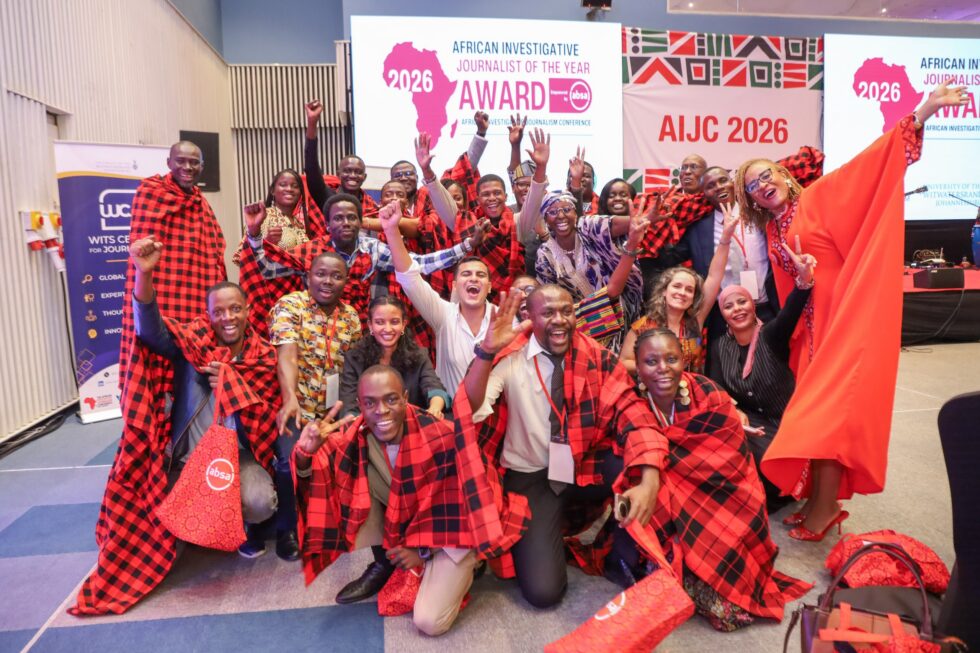
The African Investigative Journalism awards, supported by Absa, are held annually to recognise and celebrate excellence in investigative journalism on the continent. The awards are part of the African Investigative Journalism Conference, hosted by the Wits Centre for Journalism.


Leave feedback about this