
By Zitamar News
Mozambique does not have a fuel crisis. Ships are arriving, supply chains are functioning, and, by all credible accounts, there is no immediate shortage.
But prices will rise. Existing fuel stocks were procured at earlier, lower prices, but new shipments are already being ordered at significantly higher rates. That increase will soon feed through to consumers.
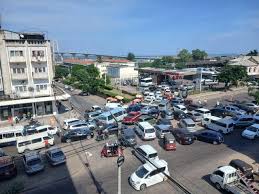
The queues that periodically form at filling stations are a reminder of how exposed the economy remains to imported fuels, even as the country sits on significant domestic energy resources. That contradiction is getting harder to ignore.
In principle, Mozambique has two clear alternatives for its transport sector: gas and electricity. Both are available domestically. Both could, over time, reduce the country’s dependence on imported petrol and diesel. Yet in practice, neither has moved beyond the margins.
Gas is the more immediate case. Mozambique has long had the technical possibility of using compressed natural gas in vehicles, and in Autogás has a company that in principle stands ready to build out the infrastructure and the market. But progress has been limited.
The economics, on the surface, are compelling. Gas can cost roughly half as much as petrol at the pump, and around 4,000 vehicles are already using it, including commercial fleets of drinks companies Coca-Cola and the distributor Handling. But scaling beyond that has proved difficult.
The obstacles begin with cost. Conversion kits, even after a partial subsidy from Autogás, still cost around $1,000 to $1,200, a significant upfront investment in a market where vehicles themselves can cost little more than that. Infrastructure is another constraint. There are fewer than ten refuelling points in and around Maputo, each requiring investment of around $1m, with only limited expansion beyond the capital so far.
More strikingly, even where supply chains exist, they do not align. Autogás sources gas via the Matola Gas Company, but argues it should be able to procure directly from the national hydrocarbons company, ENH, at lower cost. At the same time, ENH has struggled to make effective use of domestic gas allocations from Mozambique’s growing production. The result is a system in which supply and demand fail to meet.
The deeper problem, however, is political. Gas has never been clearly prioritised as a transport fuel. A policy dating back to 2010 envisaged that 10% of public sector vehicles would run on gas, but it has not been implemented. There are no meaningful incentives for private adoption, and no directive for state fleets to lead the transition.
That reflects entrenched interests. Liquid fuels generate tax revenues and support a wide ecosystem of intermediaries, including those linked to the road fund. Shifting away from petrol and diesel would disrupt those flows, at least in the short term. As with efforts to move freight from road to rail, the transition implies a confrontation with established lobbies.
Electricity presents a longer-term opportunity, with a different set of constraints — principally the cost of electric cars. But the example from other African markets suggests the most promising entry point for electric transport is in the vehicles that drive the economy: motorcycles, three-wheelers, minibuses and delivery fleets. These are intensively used assets, where savings on fuel and maintenance can outweigh higher upfront costs.
Mozambique is some distance from that shift. But the barriers are not fundamentally different from those facing gas: high upfront costs, limited infrastructure, and a lack of targeted policy support.
There are also clear levers available. Temporary subsidies, whether for gas conversion kits or electric vehicle imports, could help build early demand. Expanding refuelling and charging infrastructure beyond Maputo would make adoption viable for commercial operators. And ensuring that domestic energy producers are able, and incentivised, to supply local markets would begin to close the gap between potential and reality.
At present, Mozambique’s energy model remains unbalanced. Gas is produced but marginal in transport. Electricity is generated but not yet integrated into mobility. Meanwhile, the economy continues to rely on imported fuels to move people and goods.
The queues at petrol stations are not, in themselves, a crisis. But they are a visible symptom of a failure to turn domestic energy into domestic advantage.



Leave feedback about this