By Zitamar News
Good afternoon. Every few months, an official explains that the state cannot stop the plunder of Cabo Delgado’s forests because the insurgency has made the province too dangerous to police. The provincial delegate of the environmental agency (AQUA), Achimo Francisco, gave Notícias the latest version this week (see below): security risks have restricted field inspections, he said, and the agency has been forced to move its main inspection centre to Montepuez. It is half the story, and the more comfortable half.
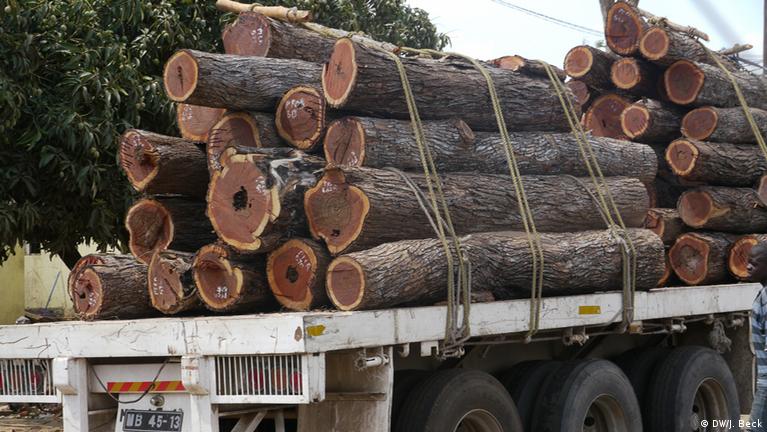
A 2024 Environmental Investigation Agency (EIA) research found that more than 89% of the timber Mozambique sent to China between 2017 and 2023, some 3.7m tonnes worth $1.3bn, was exported in breach of the national ban on log exports. Former environment minister Celso Correia once estimated that illegal logging cost Mozambique more than half a billion dollars a year.
The full Daily Briefing continues below for Pro subscribers. Subscribers to the Zitamar News tier can read the top half, including the full leader article, here.
Subscribe from just $12 a month
The conflict in Cabo Delgado cannot explain a trade of this scale. Timber must be cut, loaded, driven through checkpoints, processed, documented, and placed aboard ships. There are documented cases of detained trucks being released after calls from senior members of the Frelimo establishment or veterans of the liberation struggle. Chinese traders cultivate the same political protection. The EIA reported that Chinese timber and mining trader Yu Guofa, known as “Cabeça Grande”, claimed close relations with former president Filipe Nyusi and former general Alberto Chipande. Another source told the investigators that Chipande helped him obtain timber documents.
Former minister Isabel Nkavandeka, an influential Frelimo figure, owns a 10,000-hectare concession in Muidumbe. The EIA reported that a Chinese businessman allegedly used her export licence in a scheme involving 102 containers of illegal timber sent to China and subsequently returned to Mozambique. Nine people were reportedly charged, but Nkavandeka was not among them, and her concession and export licence were not suspended. Her case allegedly shows how legal concessions and political connections may provide cover for a much larger illegal trade.
The routes are equally visible. Timber continues to cross from Nangade district into Tanzania through border areas guarded by the Tanzania People’s Defence Force. Before insecurity closed much of the coast, boats carried timber from Mocímboa da Praia to Mtwara and Zanzibar. Montepuez remains the laundering centre, where wood from different sources is processed and prepared for export. In six months, AQUA seized just 80 cubic metres. In one case, the fine was MZN1,800 ($28).
There is evidence that the insurgents also profit, but the extent should not be overstated. The government’s terrorist-financing assessment says they exploit illegal forestry, mining, fishing and wildlife products and may extort businesses in conflict areas. The EIA cited sources who said insurgents cut or taxed timber and repeated an estimate of $2m a month in income. Yet a well-placed source told Zitamar News that operators licensed in Meluco are cutting around Chai and the Messalo basin outside their authorised areas, while insurgents have attacked and burned timber trucks. Operating in the same forest does not prove a commercial partnership.
Gold provides a more portable source of income. Insurgents do more than tax informal miners: reports from mining areas describe them demanding payment in gold. Gold collected by insurgents has reportedly been carried across the Lúrio River for sale in Nampula, since it offers a plausible market route for a commodity that can be moved discreetly and converted into cash far from the conflict zone.
Drug trafficking has adapted differently, and there is no public evidence of insurgent involvement in such traffic. Violence made the old northern routes less dependable, pushing traffic towards Pemba, Mecúfi, Nacala and Angoche. But sources continue to suspect that Medjumbe Island receives drugs arriving from Tanzania. This week’s seizure of 1.4 tonnes of liquid that Sernic identified as fentanyl at Maputo airport shows that the larger trafficking networks need weak institutions and protected routes, rather than territory held by insurgents.
Cabo Delgado has overlapping networks of timber dealers, miners, traffickers, officials and armed men. Blaming the insurgency for everything makes the state’s failure sound unavoidable. It also spares the people who make the phone calls, lend the licences, open the checkpoints and clear the exports from harder questions. (Moz24h)