By Kelvin Jakachira
A United Nations envoy has warned that while post-genocide Rwanda has achieved significant recovery through deliberate and strategic national policies, ongoing threats posed by armed groups, such as the FDLR, propagation of genocide ideology and denial, is a cause of concern.
The United Nations Resident and Humanitarian Coordinator in Zimbabwe, Edward Kallon said despite facing institutional collapse, mass displacement, deep societal trauma and widespread destruction, post-genocide Rwanda managed to defy the odds.
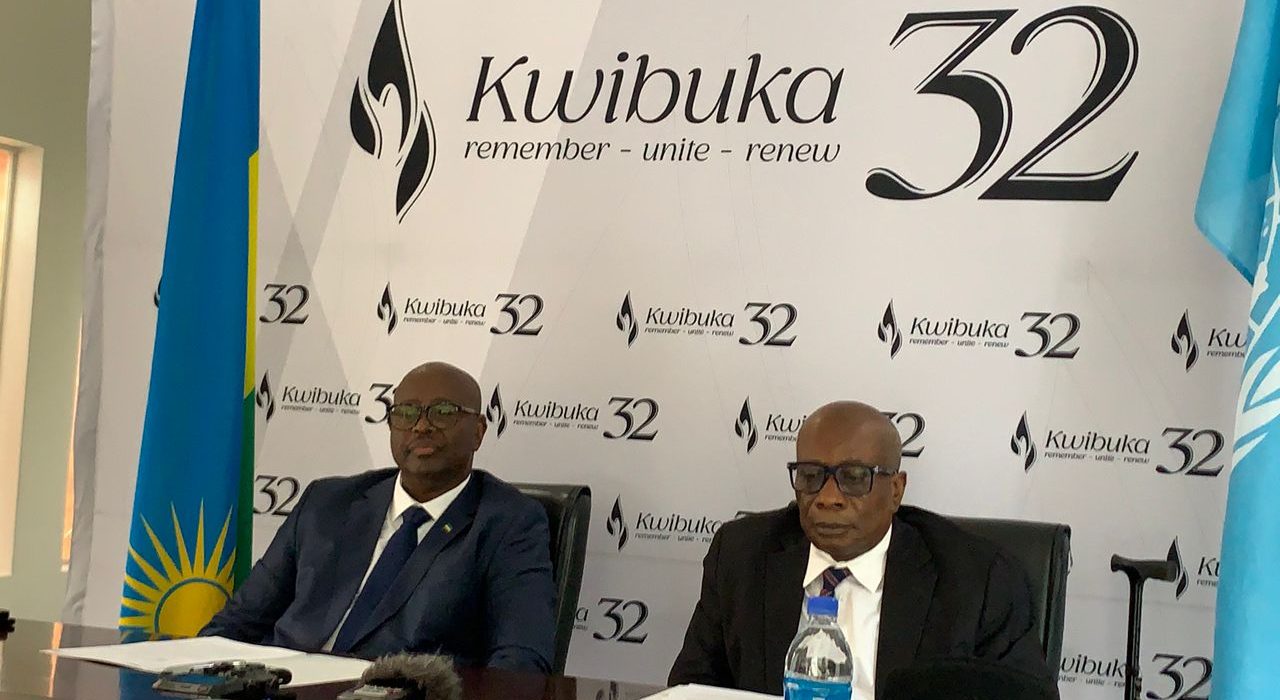
Kallon told reporters at a press briefing at the Embassy of Rwanda ahead of KWIBUKA32 commemorations to be held in Harare on the 7th of April that despite these enormous challenges, post-genocide Rwanda has made significant recovery progress which is however, under threat from the FDLR, genocide ideology and denial.
“Through deliberate policies of unity and reconciliation – including integration of former adversaries into national structures, the country has made significant recovery,” Kallon said.
“However, on-going threats remain. Genocide ideology, denial and extremism persist particular within the Great Lakes region. Armed groups such as the Democratic Forces for the Liberation of Rwanda continue to destabilize the eastern Democratic Republic of the Congo, targeting vulnerable communities and perpetuating insecurity. These risks are increasingly amplified through digital and transnational networks.”
The Rwandan Embassy in Harare will host the commemorations on the 7th of April at the Celebration Centre. Rwandans based in Zimbabwe, Friends of Rwanda, the diplomatic community and the business community will join the global community in marking KWIBUKA32.
The genocide against the Tutsi started on April 7, and for a period of 100 days over one million people murdered in cold blood by soldiers and militias of the genocidal government.
Kallon said KWIBUKA is both a remembrance and warning that continued inaction risks repeating past failures, adding there is a need to combat hate speech on online spaces to safeguard human dignity.
“There are three key messages, that is, remember, unite and renew. The priority call to action in this means we need to invest in inclusive societies and strong, accountable institutions that protect fundamental rights. There is need to combat hate speech, genocide ideology and denial in all its forms and spaces, including online to safeguard human dignity,” Kallon said.
While giving background of the genocide against the Tutsi and KWIBUKA at the press briefing, Rwanda’s Ambassador to Zimbabwe James Musoni warned that failure to combat ongoing crimes by the FDLR, the continued propagation of hate speech and genocide ideology on digital platforms, which can result in devastating consequences, amounts to complicity
The FDLR comprises remnants of the perpetrators of the 1994 genocide against the Tutsi which regrouped in the eastern Democratic Republic of Congo.
He expressed concern at the ongoing propagation of genocide ideology, denial and distortion especially in the eastern DR Congo where a genocide against the Congolese Tutsi community and the Banyamulenge is ongoing while the world is looking aside.
Ambassador Musoni said the FDLR’s activities are contributing to ongoing instability and displacement in the eastern DR Congo.
Ambassador Musoni, said KWIBUKA serves as a solemn reminder to humanity to prevent similar atrocities in Rwanda and anywhere in the world.
He said as the global community commemorates the genocide against the Tutsi, commitment that such a dark chapter should not happen again must be translated into solid action to combat hate speech and dismantle ideologies of division.
“As we commemorate the 32nd KWIBUKA, we are deeply concerned by the continuing insecurity in the Great Lakes region. The situation in eastern DRC is a stark reminder of the consequences of inaction and echoes the failure of the international community in 1994,” Ambassador Musoni said.
“We call upon the international community to take decisive action against the FDLR; combat genocide denial, hate speech and extremist ideologies; ensure accountability by bringing perpetrators to justice wherever they may be; and uphold the principles of international solidarity and the responsibility to protect.”
Ambassador Musoni praised President Paul Kagame who heroically led the Rwanda Patriotic Front fighters in stopping the mass killings and defeating the genocidal regime.
He said retrogressive pre-colonial policies that were perpetuated by the regimes that took over resulted in the genocide against the Tutsi.
“Roots of the genocide can be traced to colonial era policies that institutionalised division and discrimination, which were later enforced by successive post-independence regimes. Decades of systematic persecution, exclusion, and violence against the Tutsi were suddenly terminated,” Ambassador Musoni said.
Ambassador Musoni spoke about the enormous challenges Rwanda faced in the aftermath of the genocide against the Tutsi and the mammoth task of rebuilding a nation devastated by the loss of over one million lives, destroyed infrastructure, and widespread displacement.
Millions of people had also been forced by the genocide perpetrators to flee with them into eastern DR Congo. He said Rwanda also grappled with the task of restoring unity among deeply traumatised communities.
He highlighted efforts, which are ongoing, made to unite Rwandans, promote socio-economic progress and development.