By Kimenyi F. Muhakwa in Kigali
KIGALI –South Africa used the Africa CEO Forum in Kigali to project itself as a willing partner to fellow African countries, making the case for stronger economic ties, deeper collaboration, and increased intra-African investment at a time when the continent is seeking to turn integration commitments into practical business opportunities.
Kigali hosted the forum between May 14-15 bringing together business leaders, investors and policymakers including heads of state.
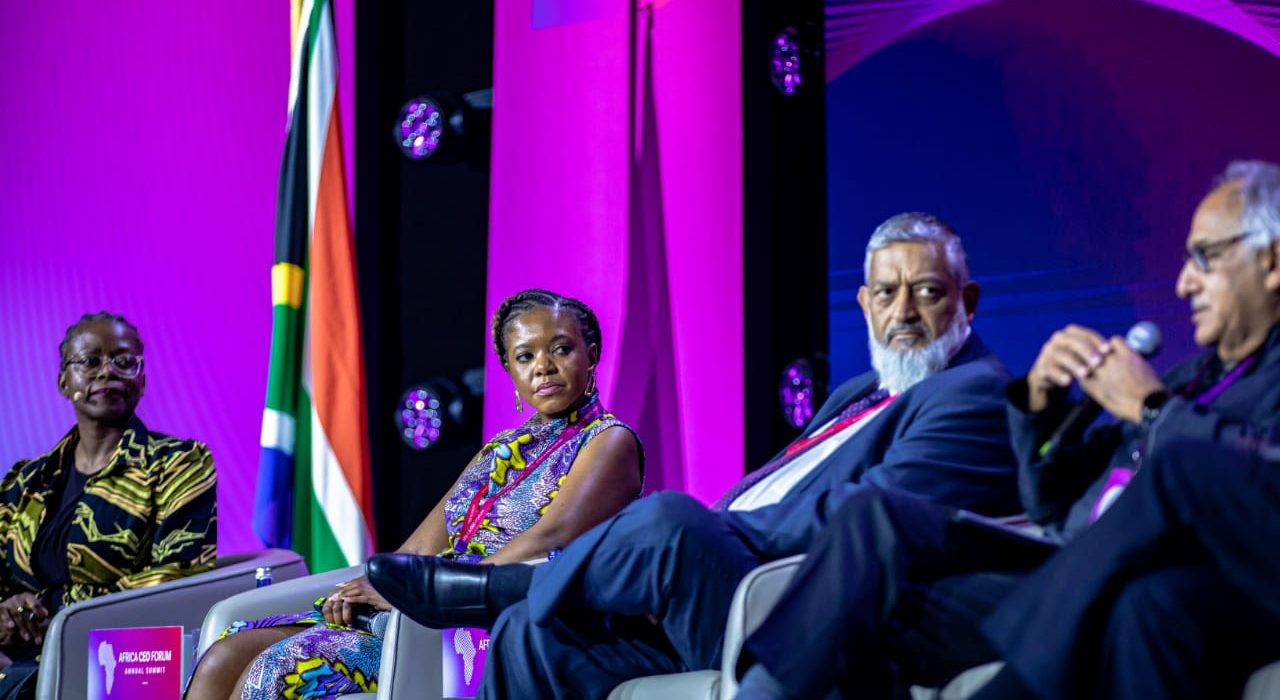
Speaking during the “Invest in South Africa” session, held on the margins of the Forum, officials and business leaders positioned South Africa not simply as a destination for capital, but as a continental economic partner ready to work with other African countries to build shared prosperity.
Mmaphuthi Rankapole, Chief Marketing Officer of Brand South Africa, said the country had come to Kigali with a message of partnership and co-creation.
“We are here as partners, as family, and as co-builders of the nations that we share,” she said, adding that South Africa’s invitation to the continent was about “new ways of investing, new ways of building, new ways of partnering across this fantastic continent.”
The session came at a time when African countries are under pressure to move beyond political declarations and build the practical systems needed to expand trade, investment, and industrial cooperation. For South Africa, the African Continental Free Trade Area offers one of the strongest platforms through which such ambitions can be realised.
Willem Van Der Spuy, Acting Deputy Director-General of Exports at South Africa’s Department of Trade, Industry and Competition, said the continental trade deal responds directly to concerns that businesses have long raised.
“AfCFTA addresses some fundamental requirements that business has been asking for: improving market size, reducing logistical challenges, and tackling tariffs and other barriers,” he said.
He added that Africa’s growth will depend on countries working more deliberately together, saying there was a need to look at the continent through a shared development perspective. That message echoed South Africa’s broader pitch in Kigali: that no African country can fully unlock its potential in isolation.
Rankapole said South Africa believes the continent’s opportunity is no longer in doubt. What remains urgent, she argued, is closing the gap between Africa’s real potential and the way it is often perceived globally. She noted that narratives around instability, conflict, and risk continue to shape how capital views the continent, with real consequences for investment flows.
“Perception is now an economic asset,” she said, stressing that changing how Africa is seen is not merely a marketing exercise, but an economic intervention.
South Africa presented its own economy as a platform that African investors and businesses can use to scale across sectors including renewable energy, agriculture, mining, automotive manufacturing, logistics, financial services, tourism, and the digital economy. Rankapole said years of investment in infrastructure, talent, financial systems, and sectoral depth had positioned the country to offer value to partners across the continent.
But speakers were also clear that deeper economic ties will require fixing structural bottlenecks that still hold back intra-African trade. Mohammed Akoojee, Chief Executive Officer and Managing Director for Africa at DP World, said the continent must stop treating logistics challenges in fragmented national terms.
“We need to start thinking about logistics costs from source to destination — not just the landside cost in one country,” he said. “We cannot continue with a fragmented approach. Africa needs an integrated, multi-modal, end-to-end logistics solution.”
For investors, the opportunity is not limited to traditional sectors. Luna Nevhutalu, Head of Institutional Sales for Global Markets at Rand Merchant Bank, said there is growing momentum around infrastructure, private markets, ESG, and sustainable development financing in Africa.
However, she called for better structuring of risk to make projects more attractive to capital.
The Kigali session ultimately framed South Africa’s message around partnership: that the country wants to build with Africa, not apart from it. Through AfCFTA, improved logistics, reliable energy, stronger financing instruments, and deliberate collaboration, South Africa argued that the continent has the tools to turn shared ambition into bankable opportunity.