

After two days of fevered overtime, the climate negotiations at COP31 in Antalya, Türkiye, ended without consensus. Several parties rejected the proposed draft pact, arguing that it lacked ambition and failed to even mention fossil fuels. This outcome stands in stark contrast to the overwhelming scientific evidence highlighting the urgent need to reduce greenhouse gas emissions to limit global warming.
Ahead of COP31, the United Nations Environment Programme (UNEP, 2026) published its Emissions Gap Report 2026: The Point of Return, which concludes that the possibility of limiting global warming to below 1.5°C above pre-industrial levels with no or limited overshoot is no longer achievable. The task now is to minimize the magnitude and duration of temperature overshoot and establish a pathway to return to 1.5°C by the end of the century.
In Antalya, two very different stories were being told about climate finance. In one, nine of the world’s largest oil companies generated USD 95 billion in profits in a single quarter. In the other, the reality of scarcity, where the international community had managed to deliver approximately USD 600 million to a fund established to help vulnerable developing countries recover from climate-induced loss and damage. As United Nations Secretary-General António Guterres ironically pointed out during COP31, the latter amounted to little more than fourteen hours of those companies’ profits.
These figures expose a tragedy of the global economy that remains remarkably efficient at monetising the activities driving climate change, yet remarkably inefficient at financing its prevention and consequences. The “scarcity” of climate finance reflects how capital is allocated, whose interests are protected, and who ultimately bears the cost of climate change.
The Politics of Climate Finance “Scarcity”
At COP29 in Baku, governments agreed to mobilise at least USD 300 billion annually for developing countries by 2035, with developed countries taking the lead, alongside a broader ambition to scale up climate finance to USD 1.3 trillion annually. At COP30 in Belém, governments called for adaptation finance to be at least tripled by 2035. Antalya was marketed as a COP focused on delivery.
Instead, new public climate finance pledges fell by more than 70% in 2026, according to Carbon Brief. Meanwhile, developing countries continue to face disproportionately high costs of capital, mounting sovereign debt, and escalating climate-related expenditure. Developing countries are effectively being asked to borrow against their future development to address a crisis they contributed comparatively little to creating.
Inside the negotiating rooms, this asymmetry was reproduced through language. Under Article 9.1 of the Paris Agreement, developed countries are obliged to provide financial resources to assist developing countries, while Article 9.3 establishes their leadership role in mobilising finance from a wider variety of sources. In Antalya, disagreements over these responsibilities reduced both the Climate Finance Work Programme and negotiations under Article 2.1(c) to largely procedural outcomes.
Private capital mobilisation is indispensable, but it is not interchangeable with public climate finance. A commercially viable renewable energy project can generate revenues against which investment can be raised. Protecting vulnerable communities from rising seas or responding to irreversible climate damage will not necessarily generate comparable financial returns.
The adaptation finance negotiations further illustrated this retreat from accountability. An initial proposed target of USD 120 billion annually by 2035 disappeared from subsequent iterations of the Antalya Pact. Even the baseline against which adaptation finance should be tripled became contested. A commitment to triple finance, without clarity on what is being tripled, who will provide it, and how progress will be measured, offers little certainty to vulnerable countries.
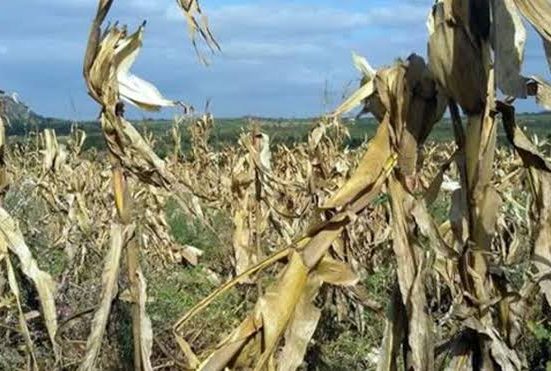
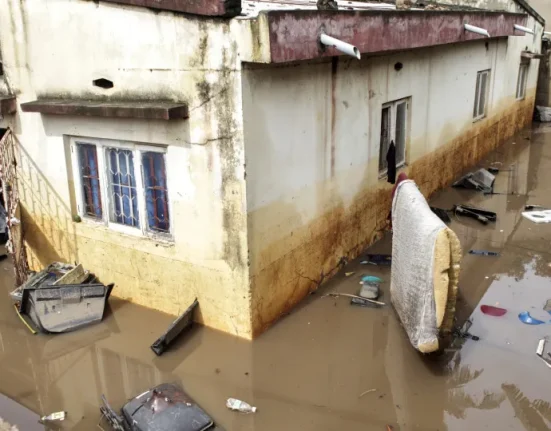
The atmosphere responds to emissions, and adaptation requires investment. Neither responds to the diplomatic posturing and ambiguity we witnessed at this COP. This represents a profound misalignment of incentives: the private returns from fossil fuel production are not matched by an equivalent internalisation of their social and environmental costs. Instead, these costs materialise elsewhere, through agricultural losses, deteriorating infrastructure, ecosystem degradation, displacement, and sovereign debt.
“This is precisely why the fossil fuel transition and climate finance cannot be treated as separate negotiating issues,” Natalie Mangondo, the lead of Sustainable Finance for Nature at GRID-Arendal, says. “One concerns the generation of climate-related liabilities; the other concerns how those liabilities are financed and distributed. To obstruct progress on either is, in effect, to undermine both. Parties that champion the transition away from fossil fuels while resisting financial commitments necessary to enable it should receive no more praise than those demanding climate finance while resisting the transition itself. Neither position constitutes credible climate leadership. To champion one while obstructing the other is oil and gaslighting.”
Turning Climate Commitments to Action
Phasing out fossil fuels is essential to reducing greenhouse gas emissions, minimizing temperature overshoot, and limiting anthropogenic climate change. Yet political commitments have not been translated into sufficient action. In response to this gap, Colombia and the Netherlands convened the first International Conference on Transitioning Away from Fossil Fuels in Santa Marta, Colombia, in 2026, launching the Santa Marta Process to advance a just, orderly and equitable transition. As UNEP (2026) explains, the process is designed to complement, rather than compete with, the formal COP negotiations. It seeks to translate climate commitments into practical pathways, building on and contributing to the COP30 Presidency’s Transitioning Away from Fossil Fuels (TAFF) roadmap, addressing key challenges such as transition sequencing, national differences, finance and social protection.
In doing so, the Santa Marta Process highlights the central contradiction at the heart of international climate politics. While governments increasingly acknowledge the need to move away from fossil fuels, the political and economic structures sustaining fossil fuel dependence remain largely intact.
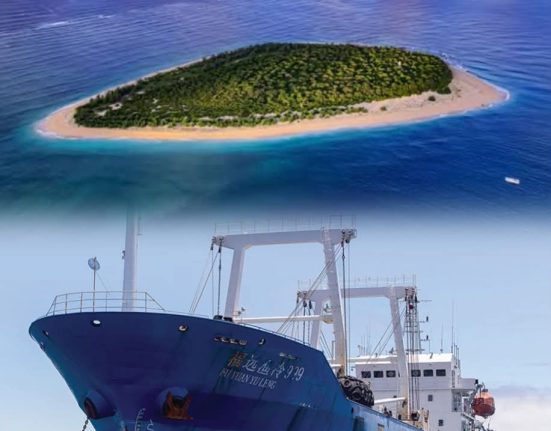
The next chapter of this process will unfold in the Pacific. Tuvalu, one of the countries most vulnerable to rising sea levels, will co-host the second International Conference on Transitioning Away from Fossil Fuels with Ireland in 2027, building on the momentum created in Santa Marta.
Tuvalu’s emerging leadership brings an important perspective to the global transition away from fossil fuels, demonstrating how countries at the forefront of climate impacts are also shaping the international agenda. Its leadership demonstrates the importance of translating shared climate commitments into collective action towards a just and equitable transition away from fossil fuels.
Whether it will be enough to bring COP32 back on track and counter the blows landed by oil and gas lobbyists remains to be seen.
References
- Regjeringens klimastrategi for utenrikstjenesten 2025 – 2030
- Klimatoppmøtet: – Et veldig skuffende resultat
- Norway’s Fair Share of Meeting the Paris Agreement Goals
- UNEP, 2026. Emissions Gap Report 2026: The Point of Return
- UNEP, 2026. 3 things to know about the Santa Marta Conference on Transitioning away from Fossil Fuels (28 April 2026).