The Ecosystem at Risk
By Estacio Valoi and Luis Nhachote (CJI — Part 2)

Watch : The destruction of the cost
What is happening in Vilankulo is not limited to sand extraction. It involves interference with a complex ecological system, where dunes, mangroves, coral reefs and ocean currents function as interdependent components of a single environmental balance.
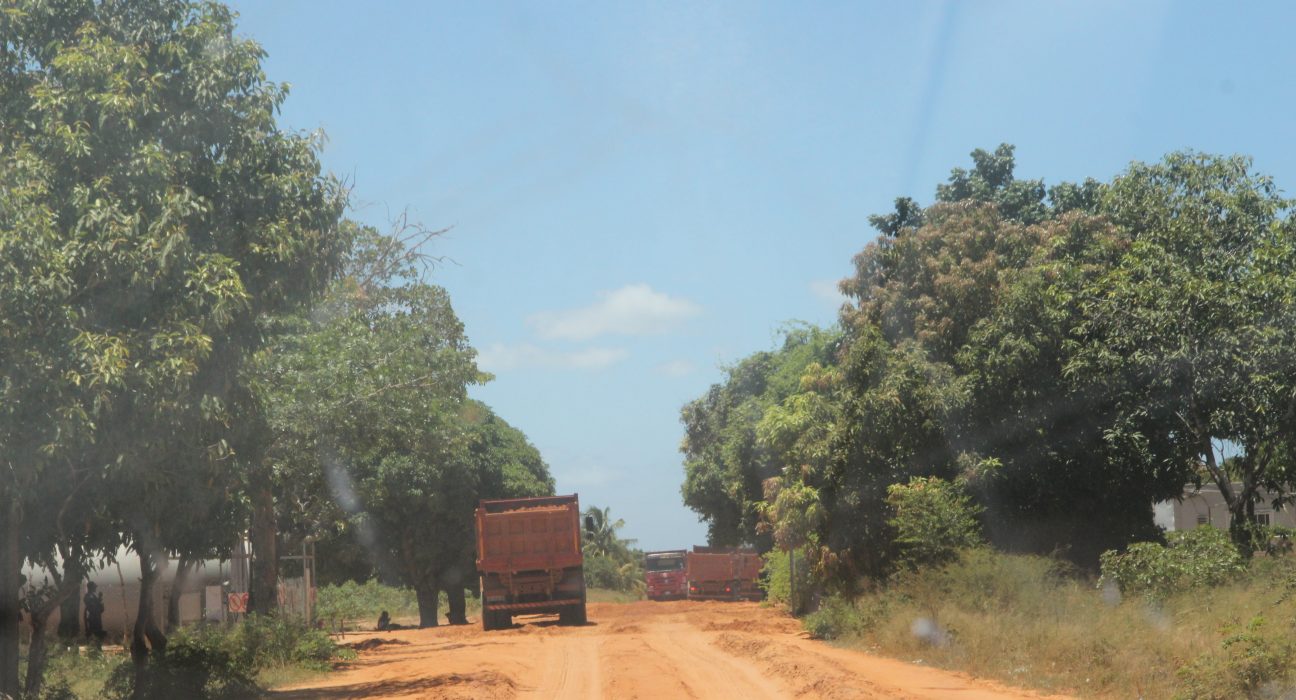
Heavy sand mining is advancing in one of the most sensitive areas of the Mozambican coast. Experts consulted and environmental documents analysed indicate that changes to any of these elements can trigger a chain reaction whose effects extend far beyond the mining area.
Coastal dunes, which are currently being mined, form a natural barrier against marine erosion. As well as absorbing the force of the wind and tides, they contribute to the stability of the coastline and to the protection of inland ecosystems and communities. Environmental studies indicate that their removal can accelerate erosion processes, increase soil salinisation and compromise the vegetation that stabilises the sand.
The alteration of the natural flow of coastal sediments represents another concern identified in the studies consulted. The sand that circulates between beaches, wetlands and the ocean may be removed or diverted, affecting mangroves, ecosystems that serve as breeding grounds for various marine species. Changes to these habitats may have consequences for small-scale fisheries and the food chains that depend on these environments.
The potential impacts also extend to the marine environment. Fine particles resulting from mining activity can be carried by the wind or ocean currents. When they reach coral reefs, they can reduce water clarity and affect essential biological processes. The degradation of these ecosystems can result in economic impacts on sectors such as fisheries and tourism.
The risks associated with this type of mining are not unprecedented in Mozambique. In various parts of the country, similar mining projects have been linked to coastal erosion, changes to lagoons and land-use conflicts. This track record is now a key factor in analysing what might happen in Vilankulo.
Questions regarding the licensing process
In addition to environmental concerns, the extraction of heavy sands in Vilankulo raises questions about the project’s licensing and monitoring process.
Documents reviewed by the report and the positions taken by organisations involved in environmental conservation raise concerns regarding the progress of the process, including issues relating to environmental licensing, impact assessments and community consultations.
At the same time, new industrial development projects continue to be discussed for the region, including proposals linked to the petrochemical sector. https://moz24h.co.mz/cidade-petroquimica-no-coracao-da-paisagem-maritima-de-inhambane/ . In this context, a central question remains: what were the technical opinions and administrative decisions that underpinned the progress of these projects in one of the most environmentally sensitive areas of the Mozambican coast?

The expansion of projects in the Inhambane Marine Landscape
In recent decades, the Inhambane Marine Landscape has received significant investment in tourism, biodiversity conservation and community development. Tour operators, investors and environmental organisations argue that the integrity of the ecosystems constitutes one of the region’s main economic assets.
However, the coexistence of extractive activities, industrial projects and conservation initiatives has been a source of debate among various local and national stakeholders.
In October 2023, Haiyu Mozambique Mining Co. Lda began operations associated with a mining project near Bazaruto National Park. At the same time, proposals emerged regarding the conduct of seismic surveys in marine areas near nationally and internationally recognised conservation zones.
Environmental organisations and experts consulted warn that these initiatives could have impacts on vulnerable species and ecosystems considered strategic for the region’s biodiversity, including habitats used by dugongs, sea turtles and various species of fish.
What documents obtained by the report reveal
An information note dated 31 July 2025, to which the report had access, shows that the matter was still being monitored by the Ministry of Mineral Resources and Energy (MIREME) and the provincial authorities in Inhambane.
According to the document, meetings were held with district administrators, sectoral authorities and the provincial governor. Among the issues discussed were aerial images of the ongoing mining operations, concerns regarding environmental damage, regulatory gaps and potential impacts on the regional tourism economy.
The same note states that the governor of Inhambane is reported to have requested a flyover of the area to gather additional information for the preparation of a report to be submitted to higher authorities.
The document also mentions discussions on possible coastal development projects, including the possibility of building a deep-water port and linking this project to other infrastructure planned for the region.
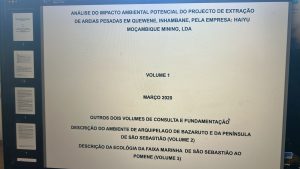

Photo: impact analyses and HYM project declined
Impacts identified in the studies analysed
The technical documentation analysed by the report points to a range of risks associated with the suction dredging method planned for the operation.
Among the identified terrestrial impacts are dust emissions, changes to vegetation cover, potential contamination of surface and groundwater, and the disruption of interconnected ecological systems.
In the marine environment, studies highlight risks of siltation, sediment deposition and potential impacts on coral reefs and other ecologically sensitive areas.
The documents analysed also raise concerns regarding waste management, the transport of mineral particles and the potential effects on communities located near the mining area.
Watch: Video by Estacio Valoi/Jangamo/Inhambane province
Two competing development models
The debate surrounding heavy sand mining in Vilankulo goes beyond environmental considerations.
On the one hand, project promoters argue that the activity can generate jobs, revenue and economic opportunities in a region marked by structural limitations. On the other, tour operators, environmental organisations and members of local communities question the long-term impacts on activities that depend directly on the conservation of coastal ecosystems.
The central question remains unanswered: how are the cumulative impacts of mining, planned industrial projects and the environmental changes already observed on the Inhambane coast being assessed?
The response could determine not only the future of Vilankulo, but also the development model that Mozambique intends to follow for one of its most valuable coastal regions.