
By Estacio Valoi
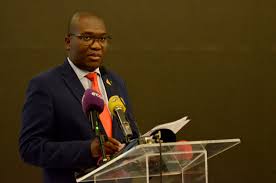
The president of the Tax Authority (AT), Aníbal Mbalango, argues that Customs should increase its contribution to public finances, keeping pace with tax collection by its counterparts in Southern Africa.
To illustrate the insufficient weight of Mozambican Customs in the State treasury, Mbalango pointed out that the entity accounts for only 28% of the revenue collected by the AT.
In 2025, international taxes collected 99.9 billion meticais, he said.
‘This contribution is considered moderate compared to that of other countries in the region, which ranges from 30% to 50%, so there is an urgent need to adjust to regional trends,’ said the AT president during the celebration of World Customs Day on Monday (26).
The president of the Tax Authority said this in a country whose dependence on financial support and international loans, namely from the International Monetary Fund, the World Bank and other institutions, has been growing sharply. This dependence had been significantly reduced during the term of the then President of the Republic, Armando Emílio Guebuza, a period in which Mozambique came close to almost completely severing this relationship of external financial subordination. However, the situation changed dramatically with the contraction of astronomical debts during the governance of President Filipe Jacinto Nyusi, causing external dependence to skyrocket again, a trend that not only continues but is worsening during the current term of President Daniel Chapo.
According to various sources, Mozambique would not need to resort so intensively to external loans. Through the taxes and fees collected by the Tax Authority from taxpayers alone, the State collects an estimated annual revenue of three hundred and sixty-six billion meticais (366,000,000,000 MT), which corresponds to approximately 5.7 billion US dollars.
In contrast, in 2024, the government received around US$785.8 million in external donations (Diário Económico, 2025), an amount that, when compared to internal tax revenue, is clearly lower (13.8% of revenue collected). Nevertheless, these donations and loans are often presented in official discourse as fundamental to the financial sustainability of the state.
The president of the Tax Authority, however, avoids mentioning these figures transparently, as well as clarifying the destination of domestic revenue collected, in addition to ignoring the weak tax contribution of large multinationals, many of which pay residual taxes or maintain large tax debts without visible consequences.
Mbalango also expects greater speed in the clearance process, through reducing the time taken to submit and pay customs declarations, improving the customs advisory process, aiming for high customs/tax compliance, and greater collaboration in combating fraud, smuggling, embezzlement and other customs-related offences.
As if that were not enough, Mozambique has lost more than US$2.3 billion in under-invoicing schemes in the extractive industry
Under-invoicing of exports remains one of the main channels for the illicit outflow of wealth from the extractive industry in Mozambique, significantly reducing the state’s ability to collect revenue to finance development.
This is one of the key messages of the study entitled ‘Illicit Financial Flows in the Extractive Industry in Mozambique’, conducted by the Centre for Democracy and Human Rights (CDD) and Oxfam Mozambique, which analyses international trade data between 2012 and 2023. The study estimates that, in the main export products alone (coal, basic minerals, rubies and natural gas), the country lost around US$2.3 billion in tax revenue, associated with more than US$4.5 billion in under-invoiced exports.
These figures highlight a deep gap between the growth of the extractive sector and its actual contribution to the state coffers, penalising the financing of essential public services such as health, education, water and sanitation.
Local authorities are linked to shareholders
Extractive activities carried out by politically exposed persons, such as those mentioned above, often bring few benefits to the communities where they occur. In mineral-rich regions such as Nampula and Cabo Delgado, local populations have often suffered forced removals, environmental pollution and unfulfilled promises of prosperity (see, among others, here).
A significant challenge arises when politically exposed persons act as local partners for foreign extractive companies in communities, as these individuals are often closely linked to local authorities – both aligned with the same ruling party. In these contexts, even tax regulations requiring extractive companies to allocate 10% of all royalties paid to the areas where they operate have generated few tangible benefits locally in Cabo Delgado.
Suspicion in the tax room
At a tax workshop held in Pemba, Cabo Delgado, in February 2025, local participants demanded that all mining taxes and royalties from joint ventures between foreign multinationals and local partners be paid within the province and spent in consultation with local communities. They expressed support for the political platform of opposition candidate Venâncio Mondlane, who had championed this same point in the recent elections. Participants also expressed deep mistrust of the ‘Maputo agreements’, referring to tax payments made by extractive companies in Mozambique’s capital. ‘Those in charge in Maputo have no control over the company’s operations on the ground, and not all activities are declared,’ explained one participant.
Another added that he suspected tax officials often turned a blind eye to companies that evaded declarations or payments. ‘Some people within the tax authority end up receiving extra payments from these taxes,’ he said. ‘There is a network that facilitates these schemes.’ However, Anibal Mbalango, a tax authority official and organiser of the workshop, rejected these suggestions, expressing strong doubts that local tax payments could be effectively managed outside Maputo. A few months later, Mbalango was appointed the new national director of Mozambique’s tax authority. (Moz24h)
https://www.zammagazine.com/…/1992-sell-outs-mozambique-2
https://cartamz.com/…/at-considera-urgente-alfandegas…/
#cartamz #Noticias #autoridadetributaria #anibalmbalango



Leave feedback about this