


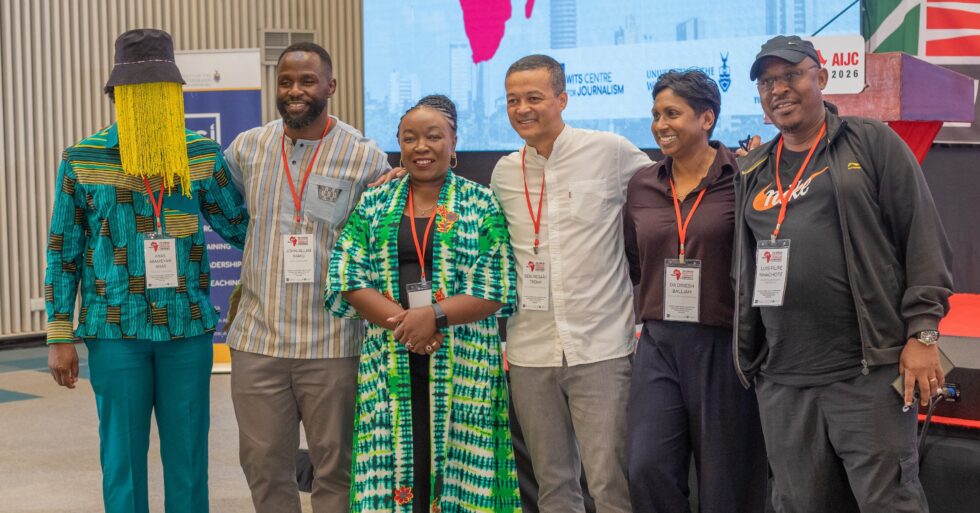


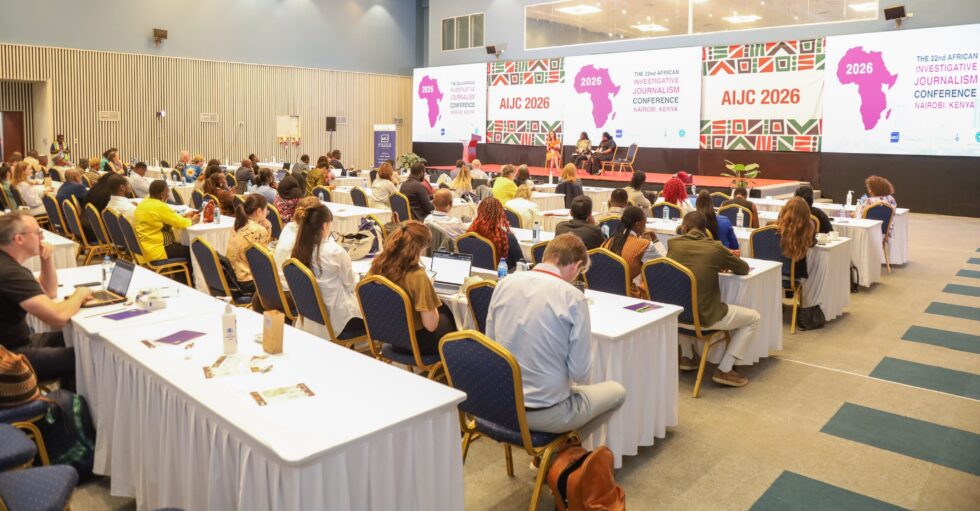
The Wits Centre for Journalism (WCJ), in partnership with the Aga Khan University Graduate School of Media and Communications (AKU-GSMC), today opened the 22nd African Investigative Journalism Conference (AIJC) in Nairobi, bringing together over 450 investigative journalists from 69 countries across Africa and beyond – a conference record.
The gathering marks a historic milestone, with Kenya becoming the first country outside South Africa to host the conference in its 22-year history. It brings together journalists, editors, trainers and other media professionals to explore critical issues shaping the future of investigative journalism, including artificial intelligence, open-source intelligence, data journalism, cross-border investigations, journalists’ safety and environmental reporting.
“At the AKU-GSMC, we see strong investigative journalism as essential to a well-informed public and accountable societies,” said Nancy Booker, Professor and Dean at AKU-GSMC. “Convening AIJC in Nairobi reflects our commitment to bridging the gap between the classroom and the newsroom and creating opportunities for the next generation of journalists to learn from experienced practitioners.”

This comes as the continent sees a resurgence of investigative journalism with the number of investigative journalism hubs gaining ground in sub-Saharan Africa, according to a study by Fojo Media Institute and Wits Centre for Journalism which identified 32 investigative journalism hubs across 19 countries on the continent.
“The WCJ is proud to partner with Aga Khan University to host AIJC 2026,” said Dr Dinesh Balliah, Director of the Wits Centre for Journalism. “This is the first time the conference will be held outside Johannesburg, and I am confident it will be a success, given Kenyan hospitality.
“AIJC is more than a place to network with colleagues committed to holding power to account. It also lets us showcase the impactful work of journalists operating in difficult conditions and highlight African journalists’ contribution to the world. We are grateful to the organisations around the globe whose support is helping make the conference possible.”
Over the next three days, journalists will share investigations, examine reporting methods and build connections across borders.


