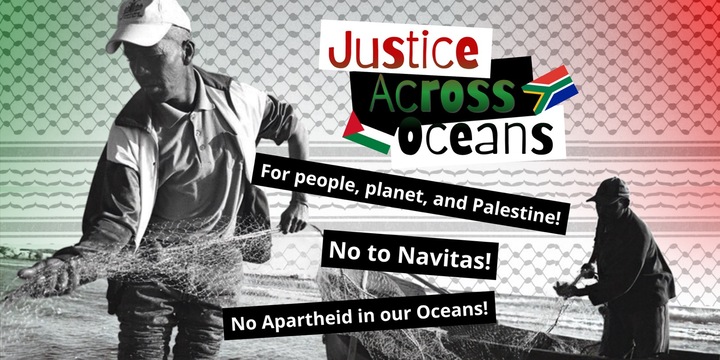
Demand Minister Mantashe: Act for people, planet and Palestine, NOT Israeli oil interests!


Campaign created by

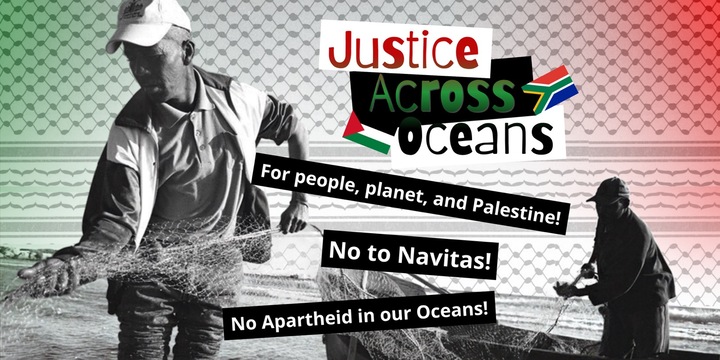
We act to support South Africa’s moral and legal obligations to uphold human rights, environmental and climate justice, especially its obligations to prevent genocide and unlawful occupation in Palestine.
We strongly object to the consent granted to Navitas Petroleum, an Israeli company, under Section 11 of the Minerals and Petroleum Resources Development Act (MPRDA), for the transfer of an interest in fossil fuel exploration rights for Block 1 CBK in the Orange Basin, on South Africa’s west coast.
We demand that Minister Gwede Mantashe:
- Overturns the approval for the transfer and halts its implementation;
- Discloses the approval, its rationale, and the complete decision record;
- Discloses and explains any steps that have already been taken to implement the transfer.
South Africa’s obligations to prevent genocide and avoid complicity in maintaining apartheid and the unlawful occupation of Palestinian territories must be reflected in the administration of its national resources.
- The approval of this transfer raises serious concerns about how commercial benefits from South African fossil fuel resources could contribute to revenues or activities enabling ongoing grave violations of Palestinian rights, including illegal occupation and crimes against humanity – genocide, ecocide and apartheid.
- There must be disclosure and assessment of the relevant ownership, financing, tax and commercial arrangements, including any material links to Israeli institutions, the military, or activities sustaining the unlawful occupation of Palestinian territory.
- There must be a transparent assessment of this transaction and its beneficiaries.
South Africa’s obligations to protect human rights and to prevent transboundary and intergenerational harm to the environment and climate must be reflected in the administration of national resources.
- The South African Constitutional Court has reinforced South Africa’s significant legal human rights and environmental obligations, including making substantial and sustained cuts to greenhouse gas emissions. It established that the livelihoods, cultural identity and environmental interests of communities must be given priority over potential corporate economic benefits.
- The approval of the transfer must reflect the Constitutional Court rulings of August 2026 in the Sustaining the Wild Coast case.
- South Africa’s constitution upholds public rights to access to information. The public must be able to scrutinise the basis for this decision, and affected communities must have a meaningful opportunity to be heard.
- The approval of the transfer must be made public and the relevant documentation must be provided.
- There must be disclosure of how the proposed operator’s capacity, environmental obligations and potential impacts on climate change, communities and their livelihoods were assessed.
- There must be disclosure of how the objections submitted by civil society were considered.
We call on Minister Gwede Mantashe to recognise the legitimate concerns of South African and global citizens about this transaction, and urgently comply with our rightful demands.
Why is this important?
Navitas Petroleum must not be allowed to export energy resources from South Africa to feed the corporate machinery of Israel’s genocide, ecocide, illegal occupation and apartheid. No profit can justify permanent ecological damage to our oceans and the livelihoods of our coastal communities.
In September 2026, South Africa granted offshore fossil fuel rights to an Israeli company, Navitas Petroleum. This is not an ordinary commercial transaction. This deal enables Apartheid Israel to benefit materially from activities within South Africa’s jurisdiction and territory that will cause irreversible harm to peoples, climate and nature.
Navitas Petroleum generates income for Apartheid Israel, Israeli investors and financial institutions. The exploration right relates to Block 1 CBK, which is situated within an ecologically and economically significant marine region in the Orange Basin on South Africa’s west coast, along its maritime border with Namibia. Any exploration or extraction would have devastating impacts on marine ecosystems, fisheries, coastal communitiesand livelihoods in both countries, and for climate-vulnerable communities globally.
Under international and domestic law, and as enshrined in its Constitution, South Africa has iron-clad obligations to ensure human rights and the protection of the environment, including the climate and marine systems. These obligations must be reflected in any decisions on national resources. National resources should not be in the hands of corporate actors whose material operations benefit regimes accused of crimes against humanity.
In allowing an Israeli company to profit from South Africa’s fossil fuel resources, South Africa is directly undermining its international and domestic legal obligations and moral standing on Palestinian liberation, human rights and environmental justice.
South Africa’s legal and moral obligations to Palestine
South Africa has a longstanding and principled stance that supports Palestinian liberation. South Africa has stated that normal relations cannot continue while Israel commits genocide and war crimes, removes Palestinians from their lands and perpetrates violations of international law. These human rights violations are documented in detail in United Nations reports.
The International Court of Justice (ICJ) Advisory Opinion on Legal Consequences arising from the Policies and Practices of Israel in the Occupied Palestinian Territory, including East Jerusalem concluded in 2024 that Israel’s continued presence in the Occupied Palestinian Territory is unlawful, and that all States are obliged to recognise unlawful occupation, and not to render aid or assistance in maintaining it.
South Africa is leading proceedings against Israel before the ICJ under the Genocide Convention. State Parties to the Convention on the Prevention and Punishment of the Crime of Genocide are bound to prevent genocide and refrain from complicity. Where a serious risk is known or ought reasonably to be known, States must exercise due diligence as well as exercise their capacity to influence and regulate private actors – including leveraging their economic ties.
South Africa’s obligations to peoples and nature
Under several human rights, climate and environmental treaties and agreements, South Africa is obligated to reduce and prevent transboundary and intergenerational environmental harm, including harm to the climate.
In Sustaining the Wild Coast, the South African Constitutional Court reaffirmed the State’s obligation to protect the environment for present and future generations. The Court emphasised that financial and commercial interests cannot be placed above the rights of affected peoples. The Court also recognised the 2025 ICJ Advisory Opinion on Obligations of States in Respect of Climate Change, which determined that States are obligated to prevent significant environmental harm, to act with due diligence in accordance with the latest science, and to ensure that activities within their jurisdiction or control do not cause harm to the environment, including the climate system.
Why a thorough public participation process is necessary
South Africa’s mineral and petroleum resources are administered by the State as custodian for the benefit of the nation. South African law recognises public participation as integral for decisions on fossil fuel exploration (PAJA, NEMA, and MPRDA).
In Sustaining the Wild Coast, the South African Constitutional Court emphasised the importance of adequate consultation to ensure that the concerns of affected peoples such as fisherfolk are considered, and that their agency and dignity is protected. Access to information is a key element of the right to public participation. Interested and affected parties must be properly informed and be able to participate in decision making.
No information regarding this transfer has so far been made available from the South African government, as of mid October 2026.
Objection to the transfer of rights to Navitas
In August 2026, human rights and environmental organisations wrote to Minister Mantashe and the Petroleum Agency of South Africa (PASA), advising that the transfer of rights to Navitas Petroleum should be denied. No response or acknowledgement was received. On 22 September 2026, it was made public by the companies involved that the rights had been granted. An application for critical information was submitted to PASA on 24 September 2026 under the Promotion of Access to Information Act (PAIA). As yet, no response has been received.
South Africa must end its complicity in Apartheid Israel’s war crimes and crimes against humanity – not form new long term commercial relationships that will be devastating for people and the planet.
Minister Mantashe must act urgently on civil society demands to stop Navitas Petroleum operating in South African waters.
Please email us for more information.
For more information and context, please watch this webinar:
Oil, Occupation & Extractivism – Why South Africa must repeal offshore oil and gas rights granted to Navitas.