 |

In this edition of the Kleptocracy Report:
- Editorial: Women pay for Africa’s exploitation
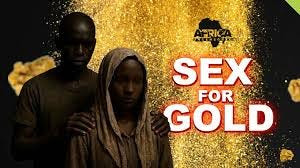
- Sex for gold: documentary on female artisanal miners
- Treasure hunt: a colonial museum fights a US Mining Firm
- Exploiting scarcity: the why of a cancelled medical trial in Guinea-Bissau
- Decriminalisation of sex work: a win for the vulnerable
- And: stories from the network!
Editorial: women pay for Africa’s exploitation
In Africa Uncensored’s documentary Sex for Gold, reporter Tracy Bonareri interviews women who, like male artisanal miners, try to make a living from informal gold mines in their area, Siaya County in Kenya. They tell Bonareri that they often end up having sex with the male miners in exchange for a bit of the gold, explaining this as a necessity, not a free professional choice. They admit to feeling abused, but need the money to feed their children and themselves.
For many women in the world, selling sex for a living is nothing new. In a 2019 ZAM investigation done in seven African countries, nearly two-thirds of women interviewed in rural and urban settings admitted to offering sex in exchange for such needs as food, school fees, medical treatment and care for elderly relatives. Like the women in the gold mines, virtually all said they would not do this if it wasn’t for those needs; they were fully aware that they risked disease, abuse, -including by law enforcement officers-, and death.
While mining gold and other minerals comes with many sacrifices and hardship for those doing it, top politicians, state officers and -often foreign- mining firms continue to negotiate the licenses and contracts between themselves. The system that enables those at the top to exploit Africa’s wealth ultimately rests on the shoulders of women at the bottom.
This is why an expected court win in South Africa for decriminalisation of sex work is good news. Not because it will end poverty, but because it will begin to alter the balance of power between women doing sex work, those employed in other labour sectors, law enforcement, and the state. At the very least harassment, detention and abuse by police officers may no longer be legally allowed in this African country. “This is a win for all vulnerable communities”, says a member of the Sex Worker Education and Advocacy Taskforce, SWEAT, in the ZAM story by Heidi Thembeka Sincuba. See below for Africa Uncensored’s documentary and Sincuba’s article.
We produce the Kleptocracy Report with a small team of African investigative journalists. Your support can help us to keep publishing in freedom and open gateways for democratic change. Read more about our work and funding here.
Sex for gold
 |

Image by Africa Uncensored
“They want to sleep with you in exchange”, says Angeline Adhiambo in the documentary “Sex for Gold”, by Tracy Bonareri for Africa Uncensored. Adhiambo’s story is similar to those of many other women working in and around the artisanal gold mines of Siaya County. And while the male miners’ lives are hard, the womens’ struggle to survive with their children is even harder. Meanwhile, those with access to mining licenses and contracts in the safe lap of state power, live in luxury.
Treasure hunt
 |

Image by Jack Wolf
Sixty years after Congolese independence, immensely valuable data on the DRC’s mineral wealth remains in the possession of a Belgian museum rather than the Democratic Republic of Congo itself. Yet instead of reclaiming these “treasure maps”, the Congolese government now appears poised to hand them directly to the US mining firm KoBold Metals as part of a recent agreement with the administration of Donald Trump. Ironically, it is the Royal Museum for Central Africa in Tervuren, near Brussels, itself a relic of the colonial era, that now stands in the way.
Exploiting health scarcity
 |

Image by Samba Baldé
The US funding allocated to a vaccine-skeptical study previously planned to take place in Guinea-Bissau could have provided comprehensive vaccine coverage for all infants in the small African country for several years. But improving health care for mothers and children seems not to have been the purpose of the Danish researchers practicing there, or of their American backers, writes Molly Fitzpatrick.
A win for the vulnerable
 |

Image by Eugene van Rooyen. Courtesy SWEAT
As sex workers and supporters gathered outside the Western Cape High Court, carrying placards demanding labour protections, safety and recognition, SWEAT advocacy manager Duduzile Dlamini emphasised that this is not an abstract case. “It’s about dignity, safety, and being able to live free from criminalisation.” “This matters for sex workers,” SWEAT’s director Emily Craven adds. “But it also matters for every other community whose rights are under threat.”
Stories from the network
- In Vilankulo, a beach paradise on the coast of Inhambane, Mozambique, the landscape is changing rapidly. Security guards now stop locals from doing their fishing. The mining may come with jobs, but nobody really knows. Our colleagues from Moz24H tried to uncover what is going on.
- The indefatigable Platform for Investigative Journalism in Malawi found out why hospitals are dispensing medicines way past sell-by date to the public, sold by a dodgy company. The fact that there is apparently no monitoring whatsoever helps, too. Read Poison for Profit here.
- Also by the PIJ: their Greenbelt Cashgate exposé gives credit where it’s due: the country’s Anti Corruption Bureau is now arresting some kingpin thieves.
- And the Kenyan Elephant offers an in-depth portrayal of the country’s kleptocrat political elite in this hard-hitting analysis by Wandia Njoya.
ZAM works with investigative reporters in African countries to bring you this content. Please subscribe, preferably paid, to support and enable more ZAM and NAIRE Kleptocracy Reports.
Thanks for reading The Kleptocracy Report by ZAM x NAIRE. Subscribe to receive new posts and support our work.